.
From March 21 to May 27th, 2026
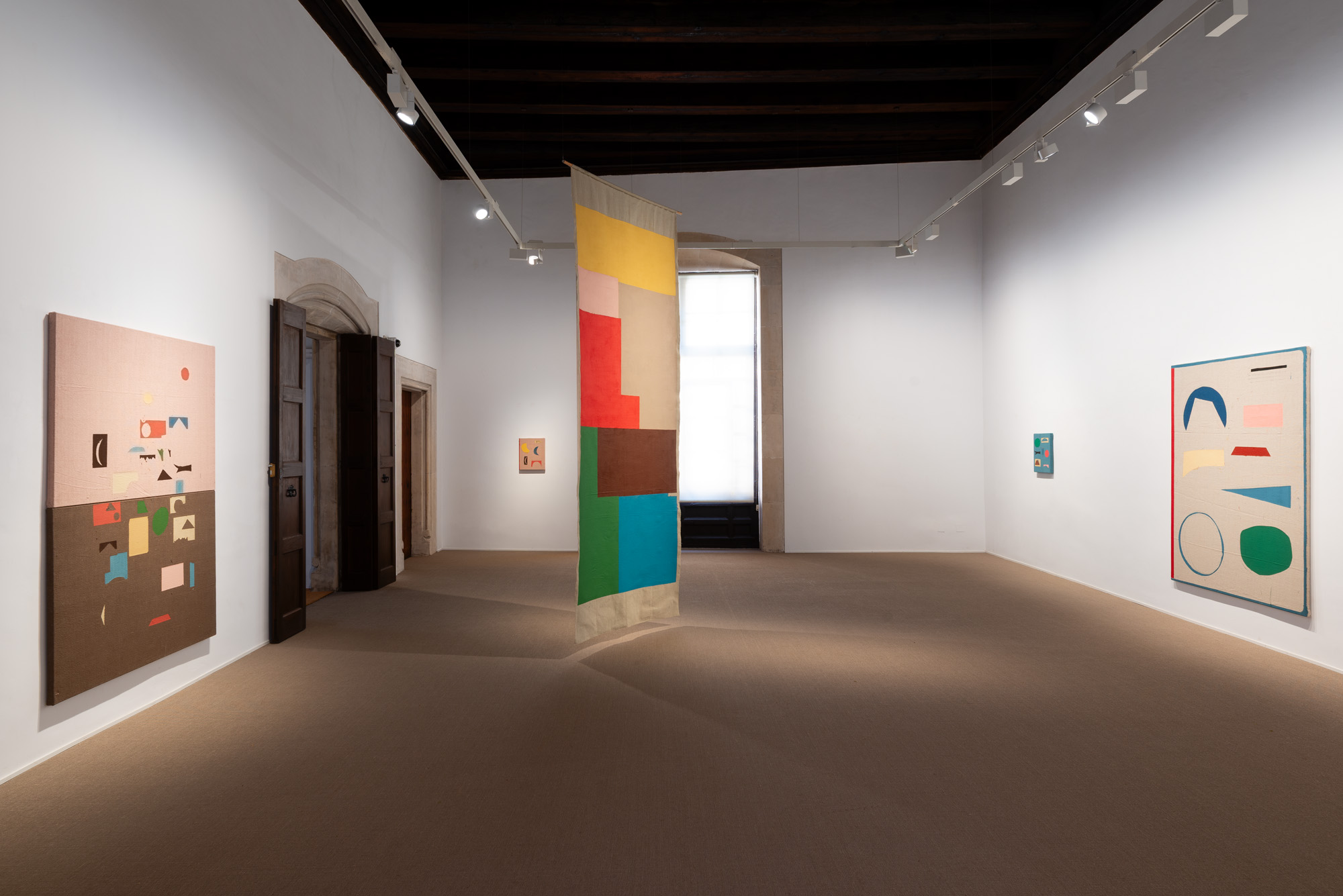
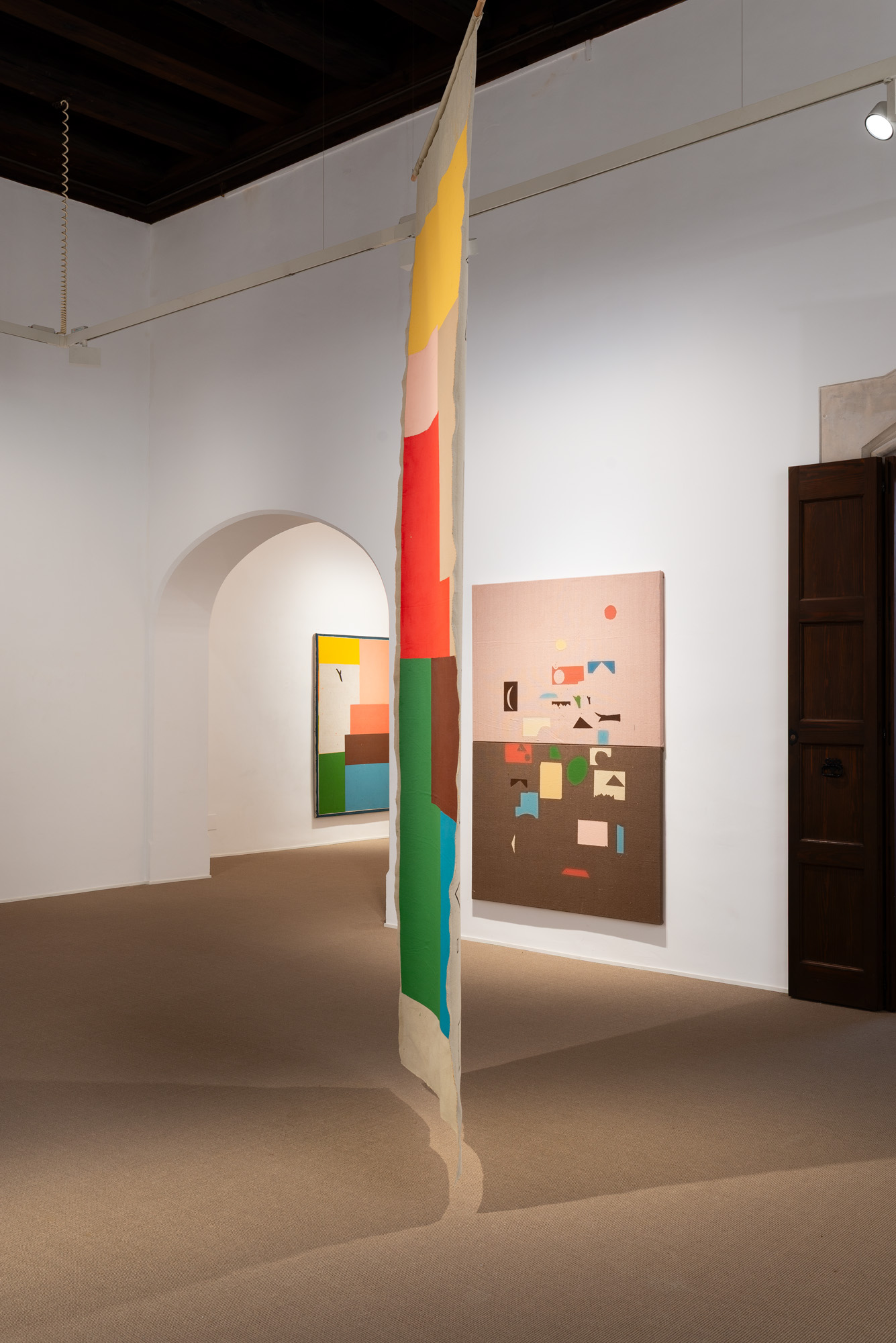
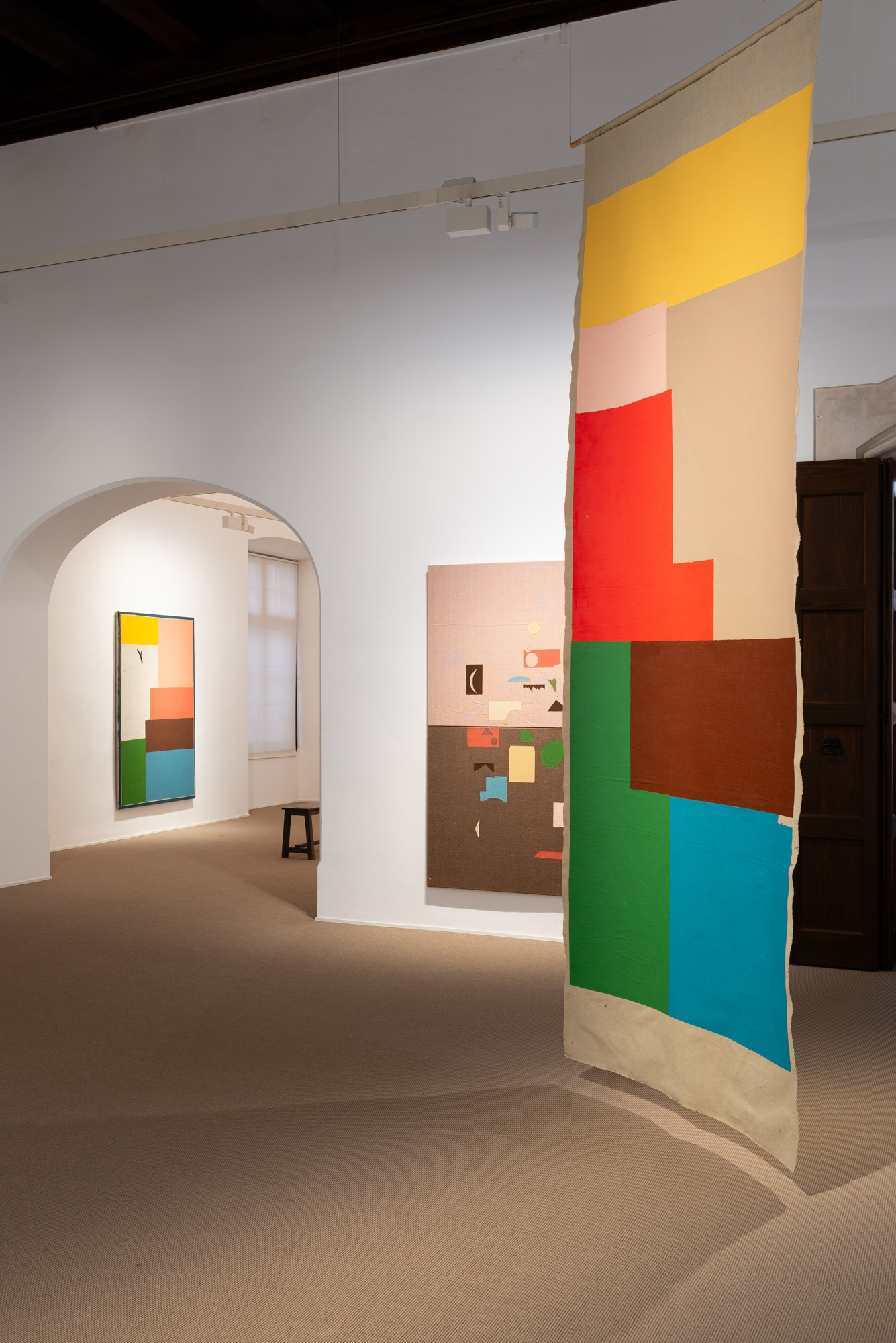
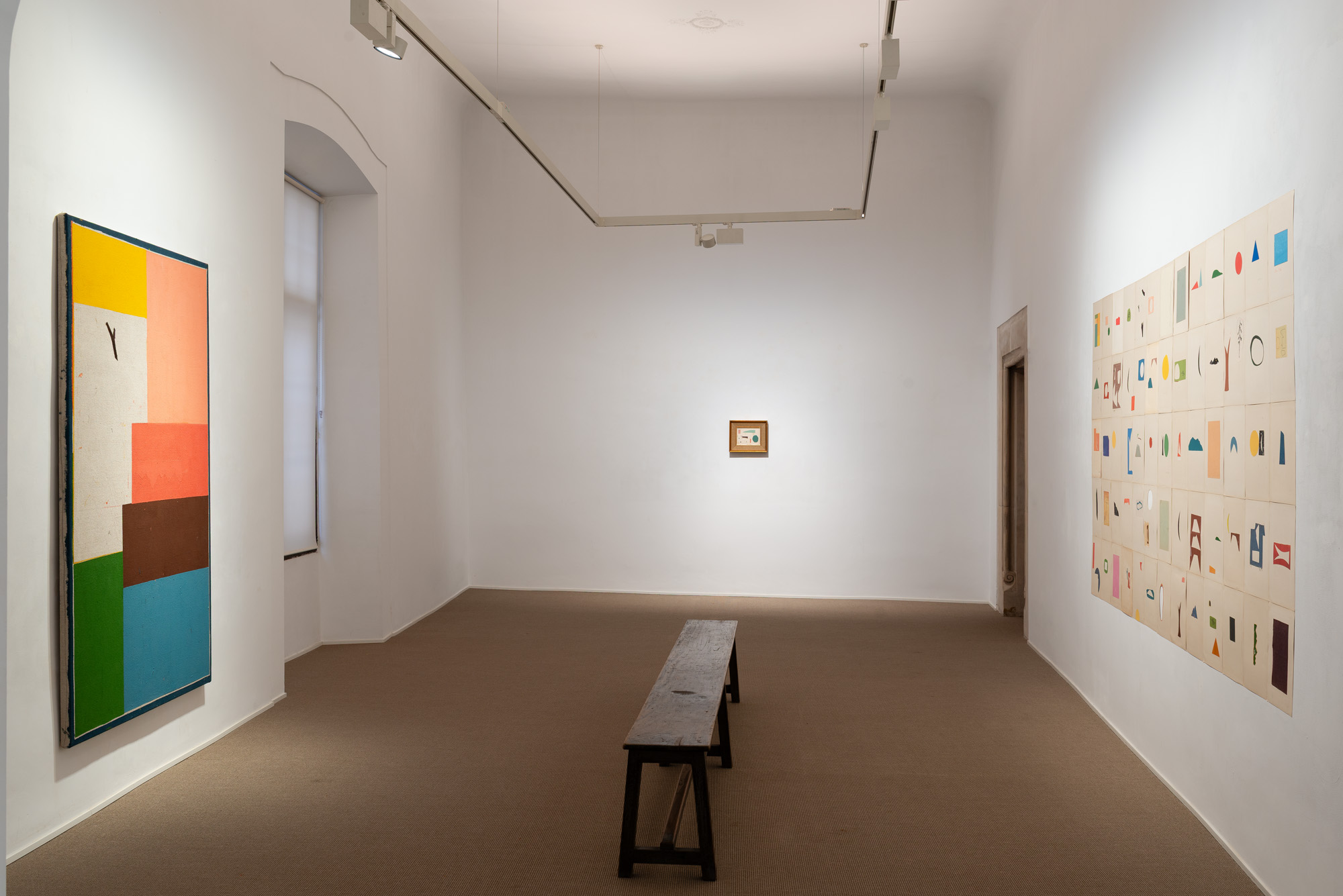
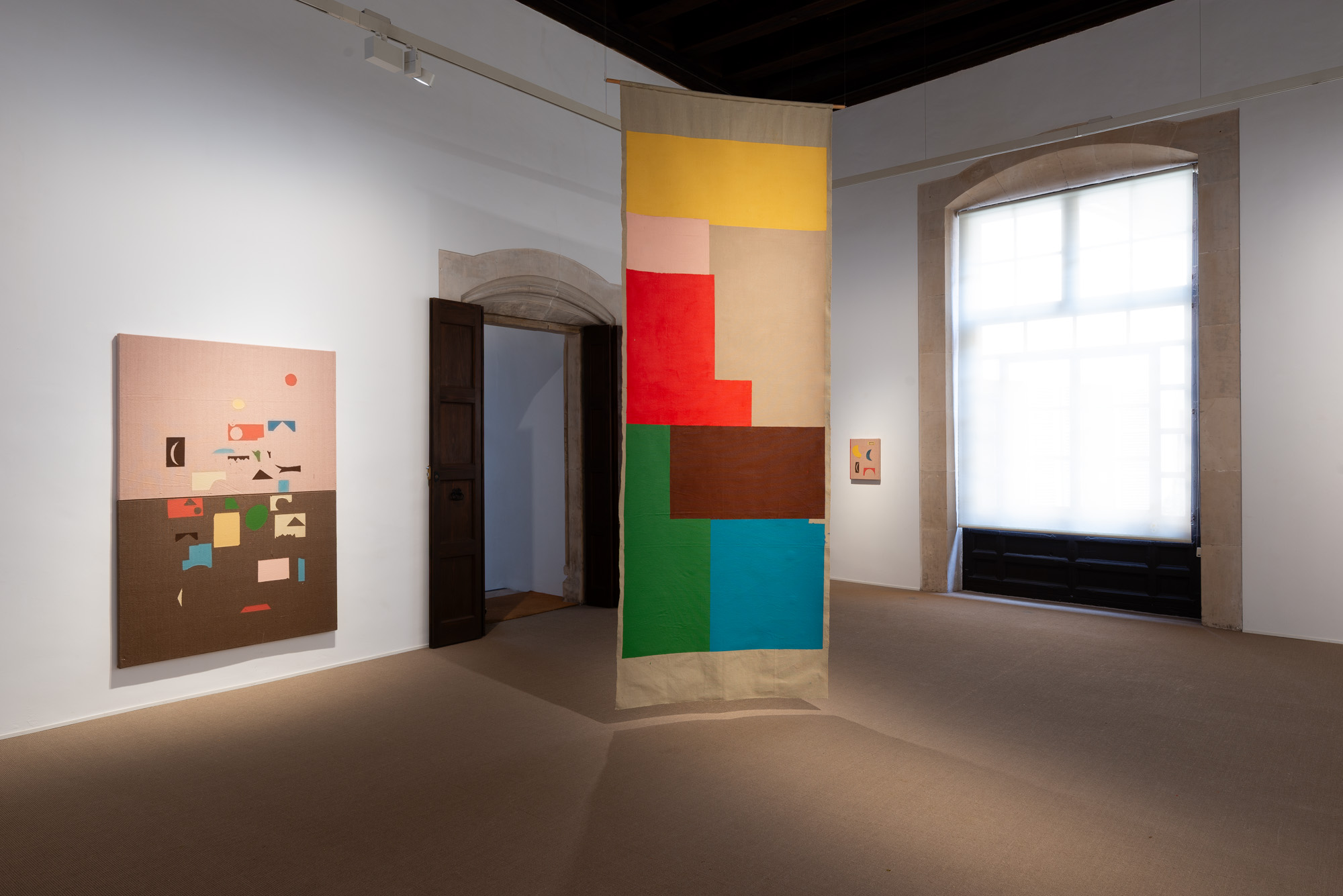
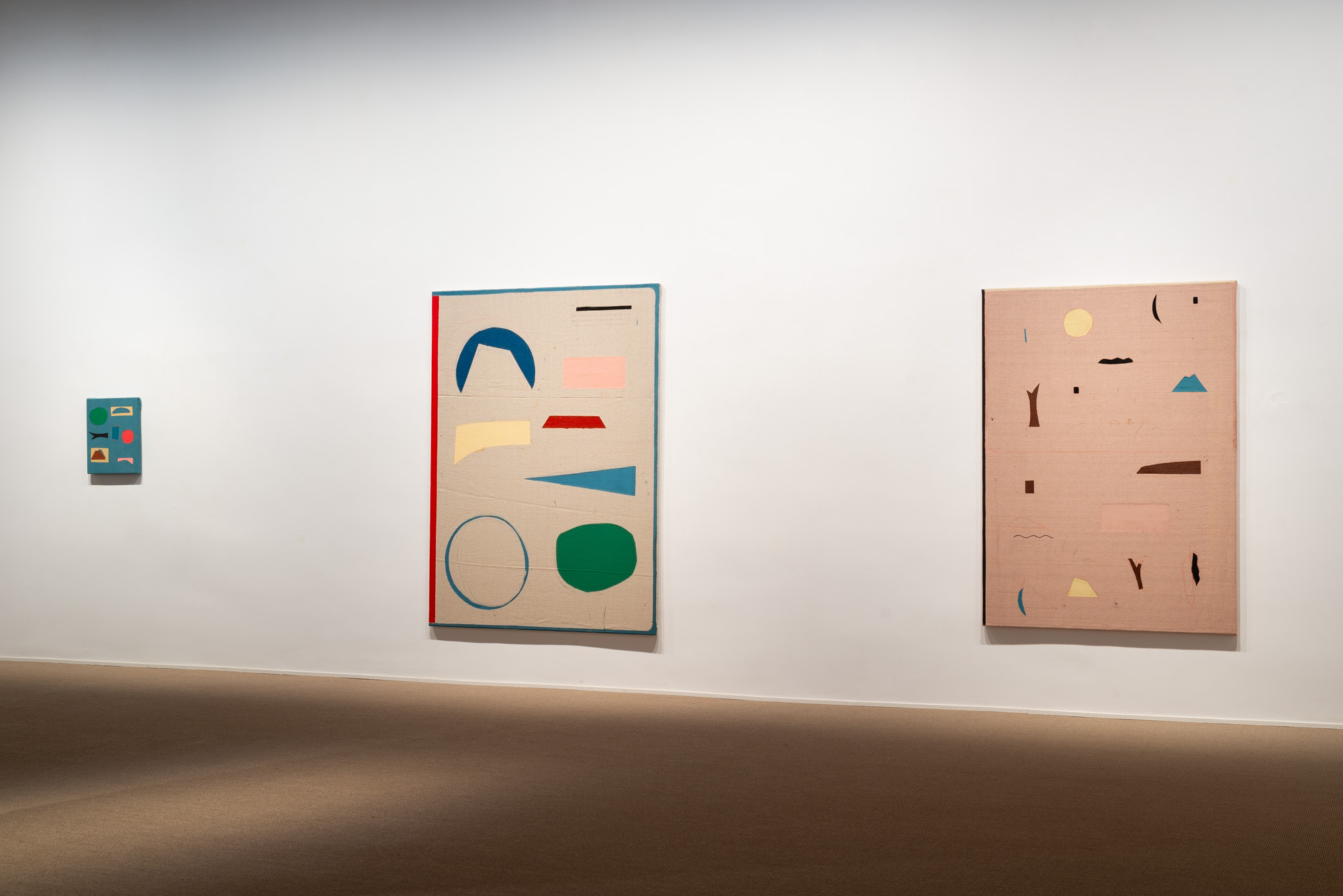
Individual exhibition by Regina Giménez on the first floor at Galeria Pelaires.
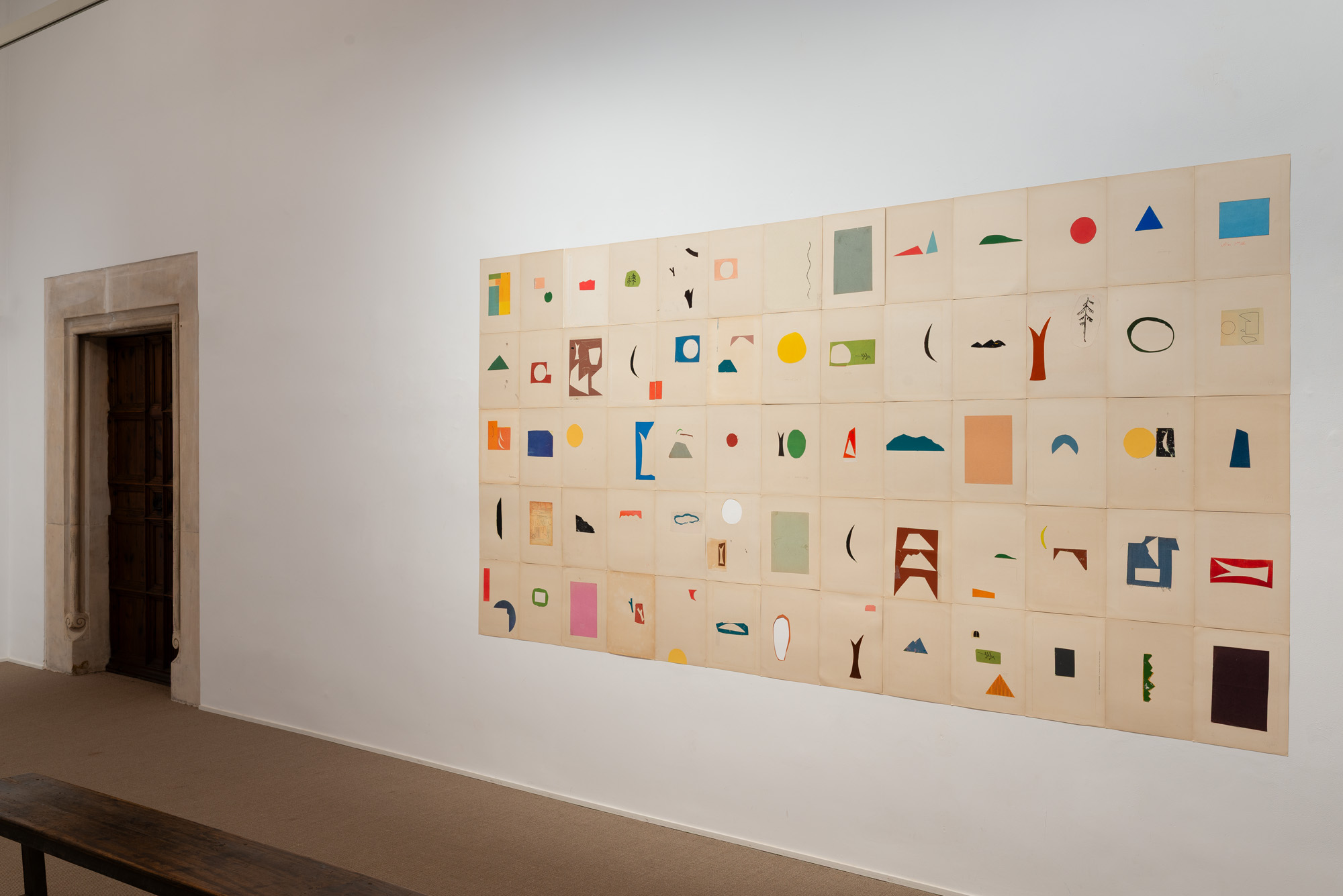
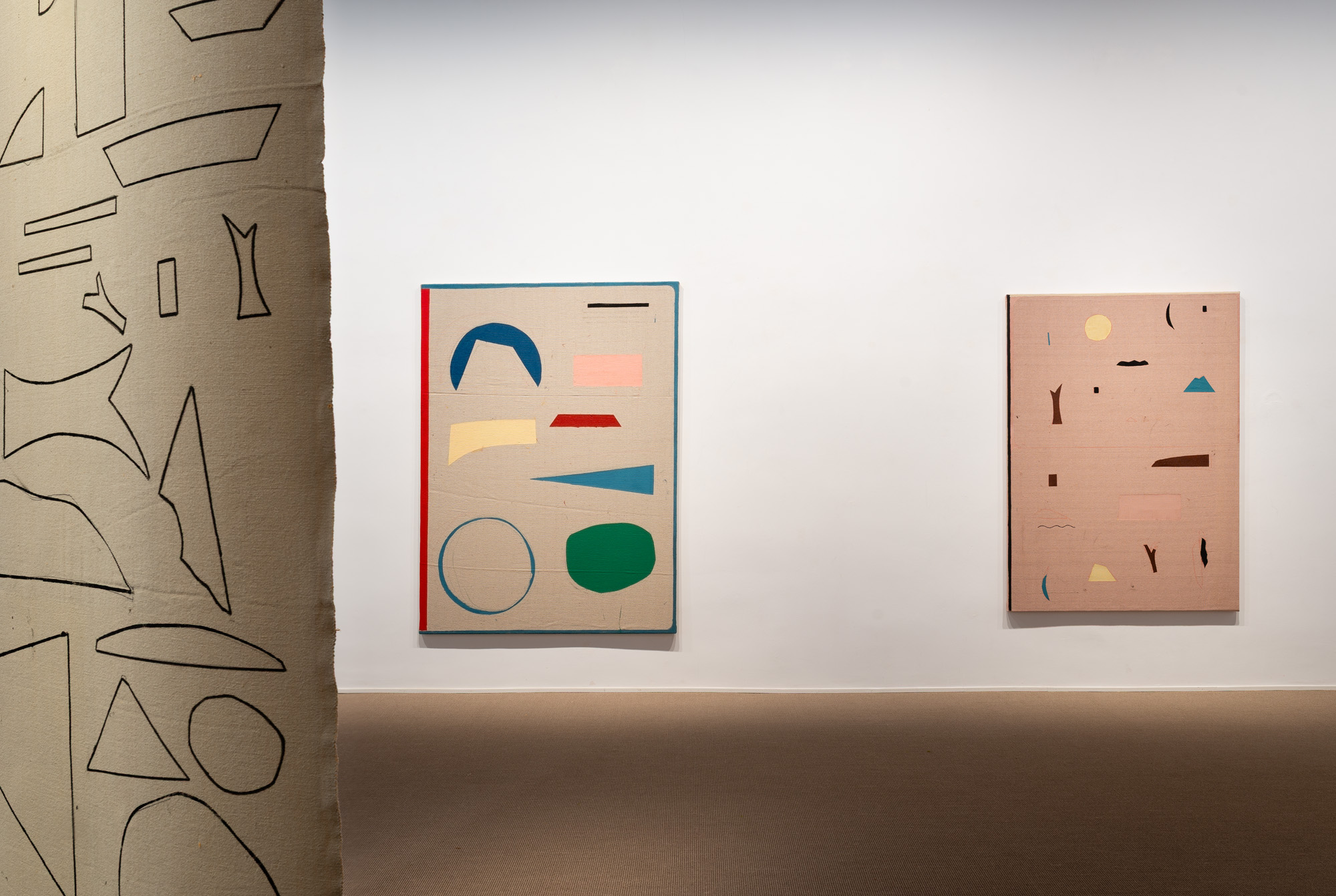
Around 1950, the publisher Seix Barral released a children's craft game, El secreto de los colores (The Secret of Colors), which consisted of an envelope with a color-printed landscape. Inside, there was a sheet of sticky paper with a face covered in colored stripes, and on the back, different shapes drawn in black to be cut out; there was also a piece of cardboard with the silhouette of the landscape where the cut-out shapes were to be glued to create the proposed image. Children would cut out the various shapes, not always recognizable, and align the colored side over the drawn silhouette on the cardboard. And… ta-da! The same landscape they had seen on the envelope appeared.
However, the children did not imagine, did not draw, did not create anything. They simply followed the instructions in order to complete the exercise.
But what happens if we don't follow the rules of the game? Perhaps we can create a new one. A game in which the cardboard with the landscape silhouette to glue onto does not exist, nor the image on the cover. We have no guide, only some colored cut-out shapes. If we don't need all the shapes, we can remove them; if some are missing, we can create new ones. And what if we use the negatives of the shapes? Perhaps we recognize the sun in a circle, the roof of a house in a triangle… or is it a red mountain?
Regina Giménez on Es puig, sa falda i es peu.
Ascent to the Heap of Meaning
by Noraedén Mora Méndez
It is through sheer pick-and-shovel work that an exhibition is put together, and perhaps the spout of the water bottle from which the artist drinks matters, or that half past three might be the hour when the light falls best on that purple band. We do not know whose feet to kiss in reverence upon reaching that summit, nor beneath which skirt to hide when the time comes to interpret a work that, for seeming so foreign, ends up being entirely penetrable. Because bodies are also forms—curvatures, feet, and peaks half-concealed by skirts. Those masses upon which colored suns fall, hollow suns, negative suns painted onto a canvas prepared to resemble a "void." How are we to see the collages, the radial diagrams, and all those possessed symbols? The circles of hell also resemble those of heaven. The pagan marvel behind the mountain has become an icon, and there it gives itself to poetry.
And yes, what happens is that ES PIC, SA FALDA I ES PEU (The peak, the skirt, and the foot) proposes a game I have not resisted. It brings a swaying motion that makes and unmakes, pays homage and blasphemes, because that is how words are and how forms are: homonymous. To stress words and forms with more than one meaning exaggerates geometry and turns it into an alphabet that formulates journeys, but also travels on its own. In the case of Regina Giménez's work, perhaps it is not the artist who has left her place, but the place that has left her work. We witness the labor of stripping painting of site to a point where anyone is allowed to find themselves within it. That is how I anachronistically encounter the games of Emira Rodríguez in those backdrops by Regina that exude the geometric perturbations of a woman from Margarita Island—and my own. Because the symbol, already condemned, can also be an open house. And it is through a kind of writing that geometry takes a pulse in Regina's work: the poetic gesture of subtracting art from its context in order to give itself to other things. Here, the symbol reveals the artificiality of its universalization so as to place on the same horizon the Russian avant-garde, the functional language of a pie chart, the plans of a geologist, and the pedagogical supplement for learning to cut things out.
Seen through these dismemberments, almost everything can be arranged and rearranged. The skirt can be placed above and the peak below; one can stand with feet turned sideways, because if there is one thing the game allows us to do, it is to look through different eyelets—or perhaps to become what we look at. Words and forms take on meaning in relation and—perhaps this is the strongest thesis of ES PIC, SA FALDA I ES PEU (The peak, the skirt, and the foot) —relation is malleable. This renaming of forms, genres, and spaces is always possible. Where dynamics have grown rigid and constraint has taken form, the peak of Regina's mountain is spilling over, leaving a trace of those geometric fascinations that are also disturbances.
_____
Among the different approaches to geometric abstraction the Catalan artist Regina Giménez (Barcelona, 1966) has been developing in recent years, her work based on research into textbook illustrations stands out. In particular, the draws from educational publications aimed at explaining scientific concepts to children, such as the formation of planets, the movement of the sun and moon, the creation of mountains, or ocean currents. She typically acquires outdated publications from the 1930s and 1940s in second-hand bookstores or flea markets, drawn to their obsolete imagery and content.
By disrupting the explanatory code of these illustrations—separating images and graphics from their explanatory notes or captions, which make them intelligible—she creates a linguistic deconstruction that strips them of their scientific and educational function, shifting them into the realm of contemporary art. The graphic and written elements, already distinct communicative codes, lose their original meaning and are transformed by the artist into new visual languages. The original sources, whether visual or textual, are decontextualized and altered to provoke new interpretations.
With an established career, Regina Giménez has exhibited consistently in national and international galleries, museums, and art centers, combining solo projects with group exhibitions. Among her solo exhibitions in museums and institutions are: Oh! Be a nice girl, Kiss me, Bòlit Diàlegs: art, música i patrimoni, Santa Maria de Vilabertran, Girona (2021); Iremos al sol, Museo Patio Herreriano, Valladolid (2020); L'Àlbum de visites, Centro Grau-Garriga d'Art Tèxtil Contemporani, Casa Aymat, Sant Cugat del Vallès, Projecte Obres els dipòsits, curated by Frederic Montornes (2020); El sol i la taula, Can Palauet, M.A.C, Mataró (2018); La Constancia, Programa Composicions, curated by Latitudes, Barcelona Gallery Weekend, Can Trinxet, L'Hospitalet (2016); Architecture d'aujourd'hui, The Green Parrot, Barcelona (2015); Art de foc art de badoc, Nadala, Fundació Joan Miró, Barcelona (2015); Símbols Convencionals, Museu d'Art Modern de Tarragona, Tarragona (2012); Fundació Vila Casas Espai Volart, Barcelona (2005); and Centre Cultural Caixa Terrassa (2003), among others.
Selected group exhibitions include: Mapamundistas, Pabellón de Mixtos de la Ciudadela, Pamplona (2025); Una exposició sentimental, MAC Mataró (2025); Preludi. Intenció Poètica, MACBA, Barcelona (2022); Taula, Espai Muxart, Martorell (2022); Sinapsis. Ciencia y Arte de la España de Ramón y Cajal al siglo XXI, Nobel Prize Museum, Stockholm (2022); Ara Mateix, Festival Loop 2020, curated by Chus Martínez in collaboration with Rosa Lleó, Arts Santa Mònica, Barcelona (2020); Modernitat Amagada, curated by Domènec and Dani Montlleó at Pabelló Sert, Can Palauet, Mataró (2019); El futuro no es lo que va a pasar sino lo que vamos a hacer, curated by Chus Martínez, Rosa Lleó and Elise Lammer, ARCO Madrid (2018); Materia Prima, curated by David Armengol, David G. Torres and Martí Peran, Centre d'Art Contemporani Fabra i Coats, Barcelona (2017), among others.
She has recently published two illustrated books, Geo-gráficos (2022) and Montañas (2024), published by Zahorí Books.
La Galeria Pelaires ha rebut una subvenció del Consell de Mallorca per a la realització d'aquesta exposició.