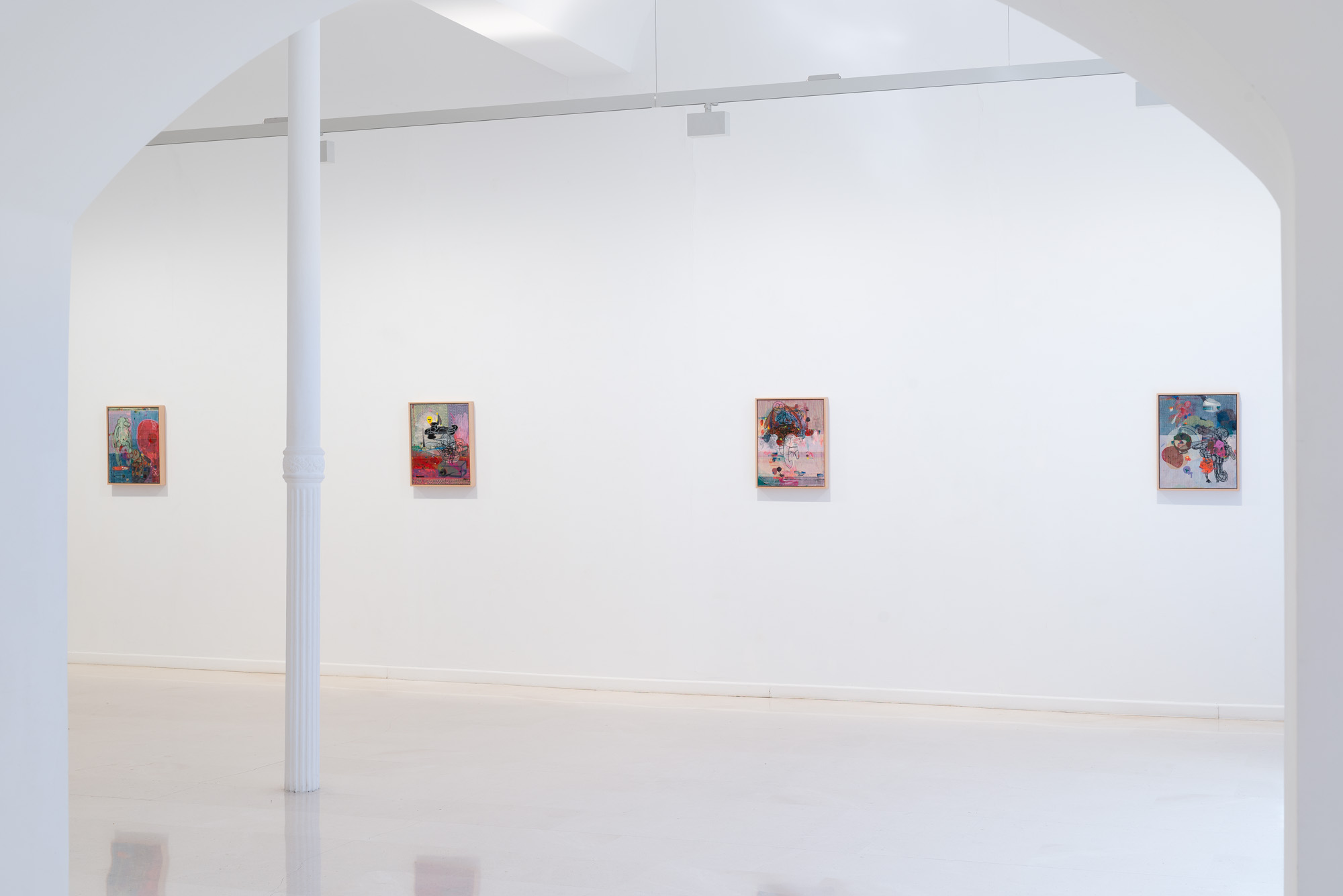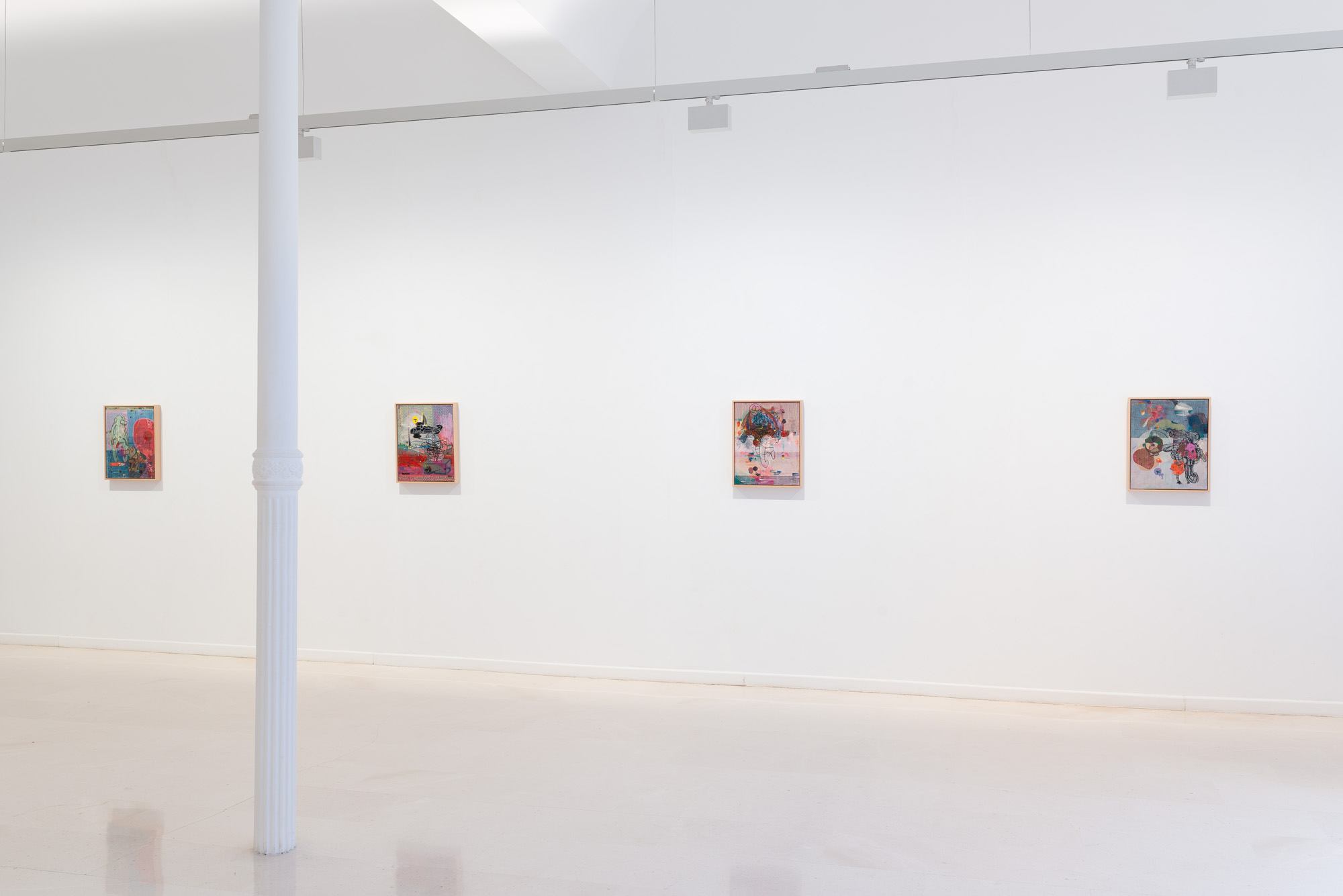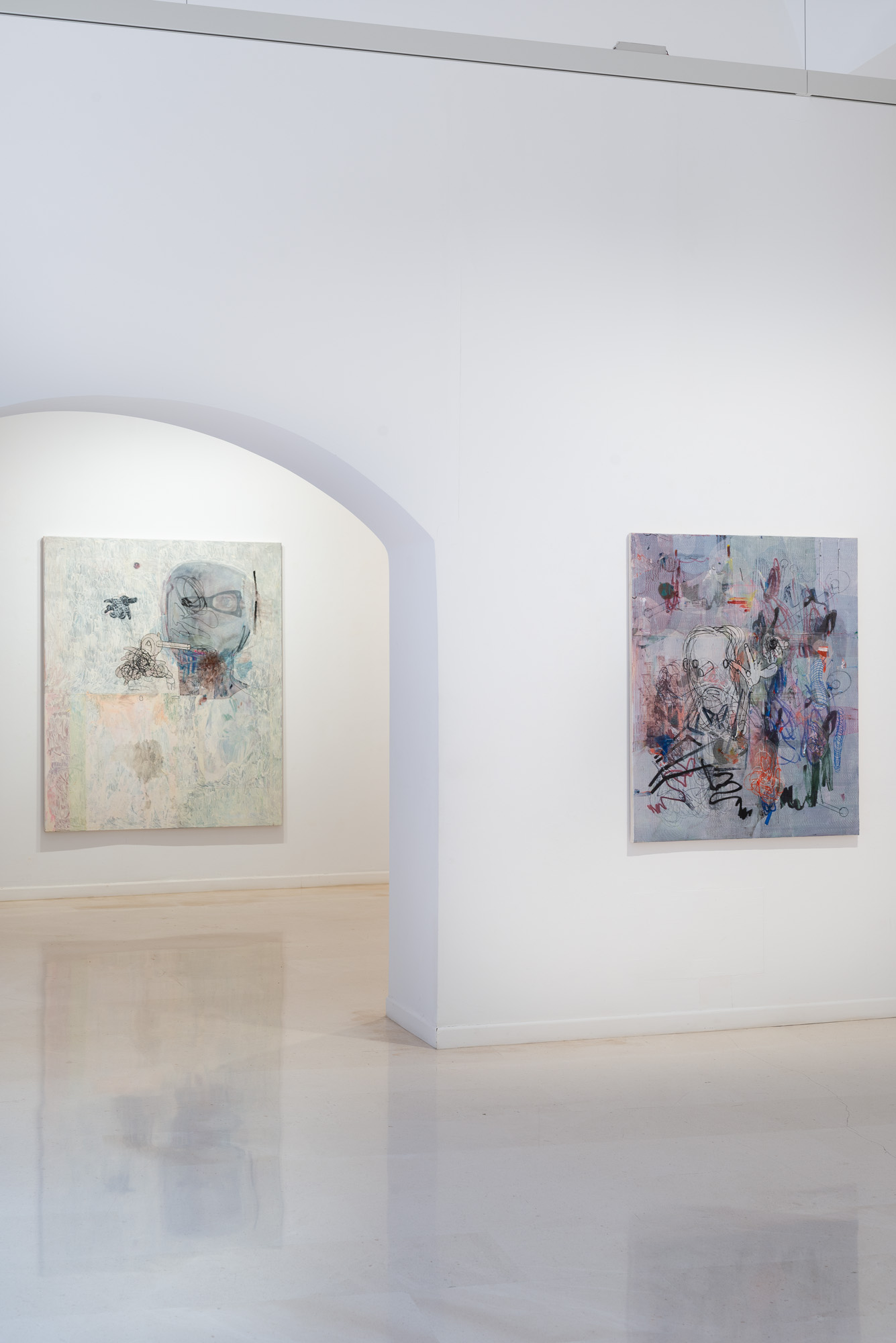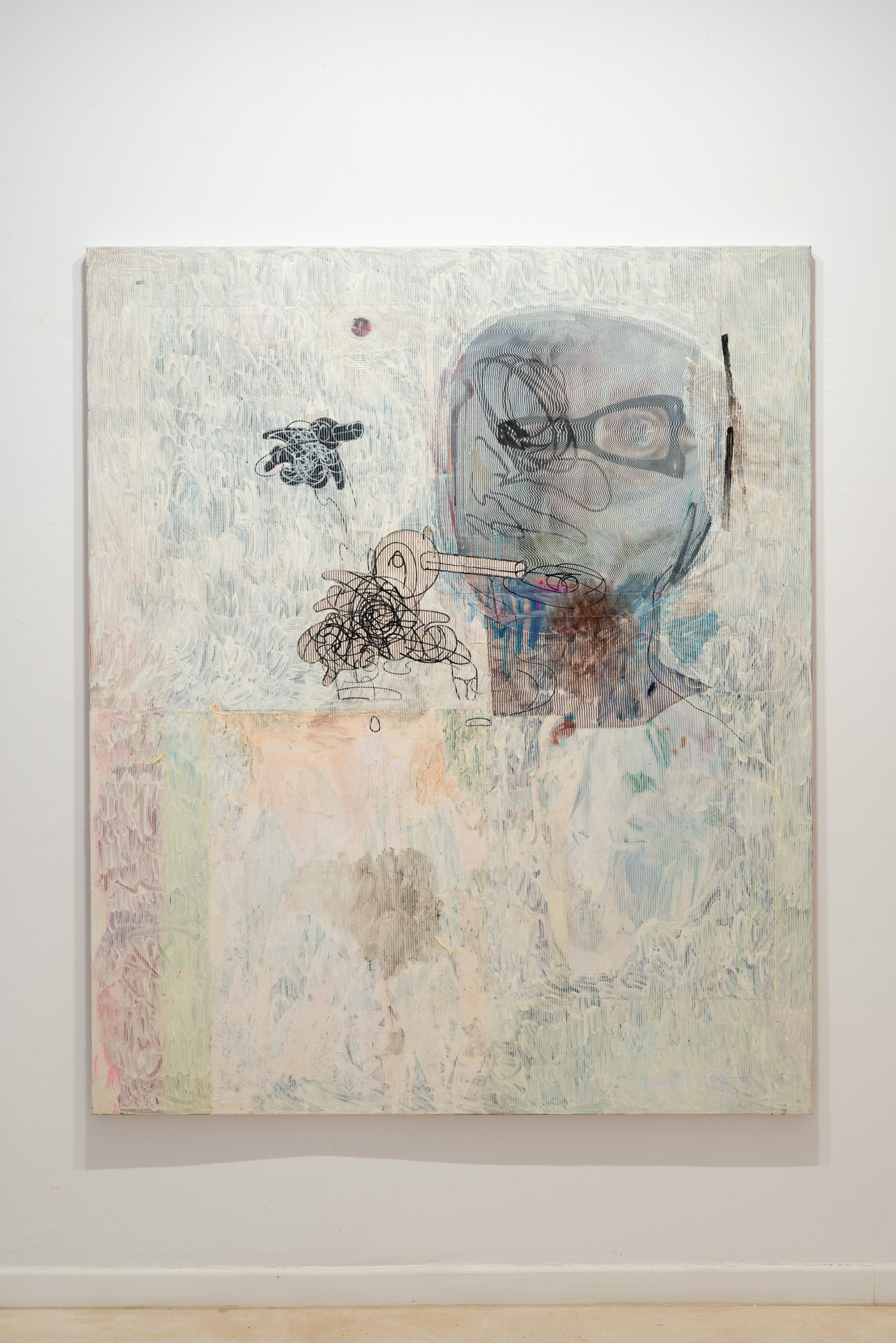
From March 21 to May 27th, 2026
First individual exhibition by Markus Oehlen on the main floor at Galeria Pelaires.
Palimpsests of Perception
by Christoph Steinmeyer
Painting does not begin with an image, but with movement. With lines that meet. With colors that settle. With traces that remain.
In the new works of Markus Oehlen, pictorial spaces emerge that do not reveal themselves immediately, but only over the course of viewing: layer upon layer, sign upon sign.
The German painter Markus Oehlen (Krefeld, 1956) belongs to that generation of artists who, in the early 1980s, within the context of the so-called "Junge Wild" (Young Wild Ones), established a renewed and subjective form of painting, clearly oriented against minimalism and conceptual art.
However, while many positions within that movement remained closely tied to the historical moment of those years, Oehlen's work has, over decades, remained in constant transformation. His painting appears less as a fixed stylistic program than as a continuous process: a flow of images in which forms, lines, signs, and colors are reorganized again and again.
This mobility constitutes one of the fundamental characteristics of his work. Oehlen's images do not arise from a pre-established pictorial formula, but from an open procedure of superimposition, stratification, and subtle displacements.
Painting always remains both the point of departure and the destination. To it he devotes his unwavering trust. For more than five decades, Markus Oehlen has dedicated himself to this medium with a consistency that continues to generate new possibilities of pictorial construction.
From the sonic to the silent and back
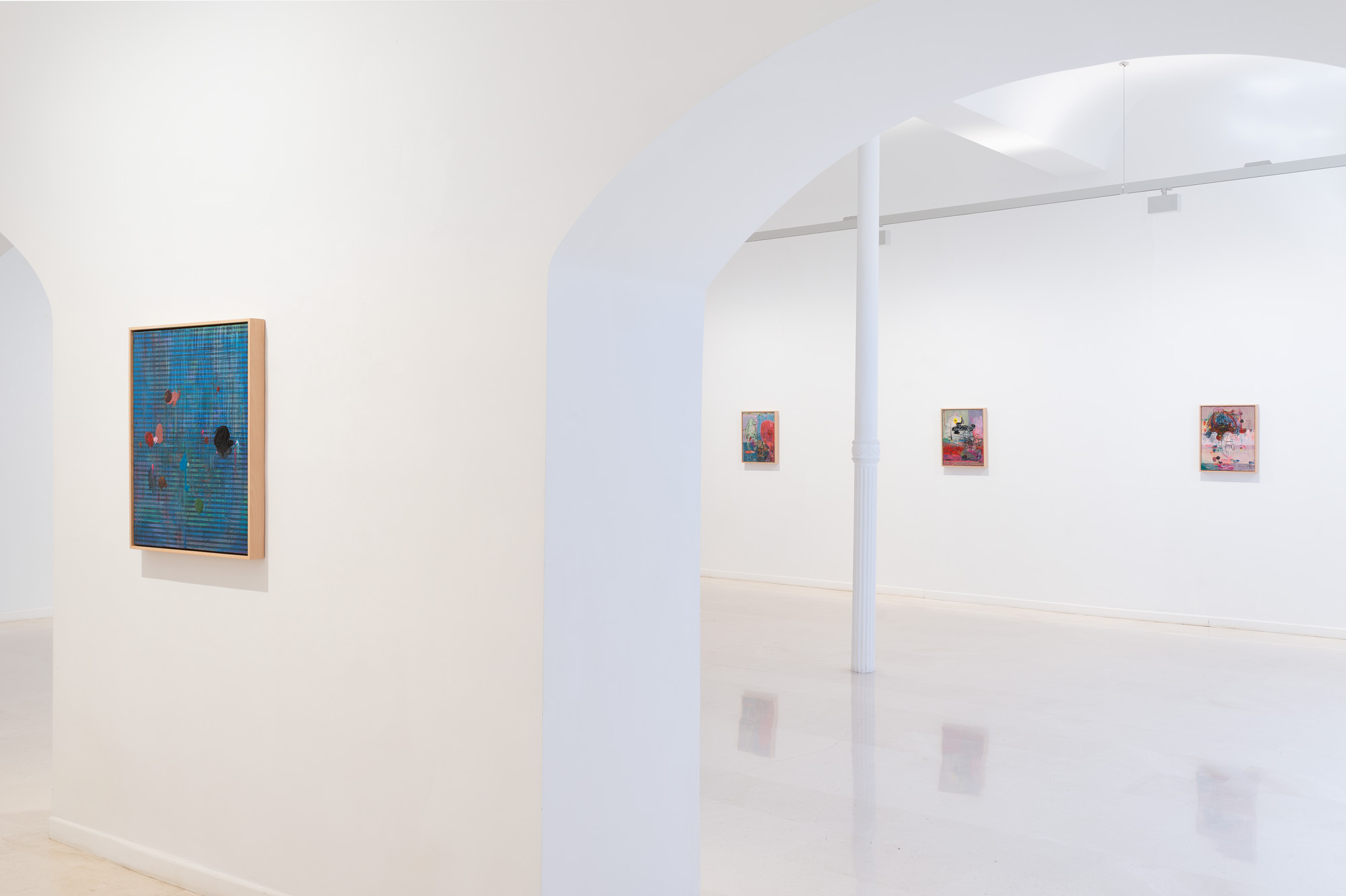
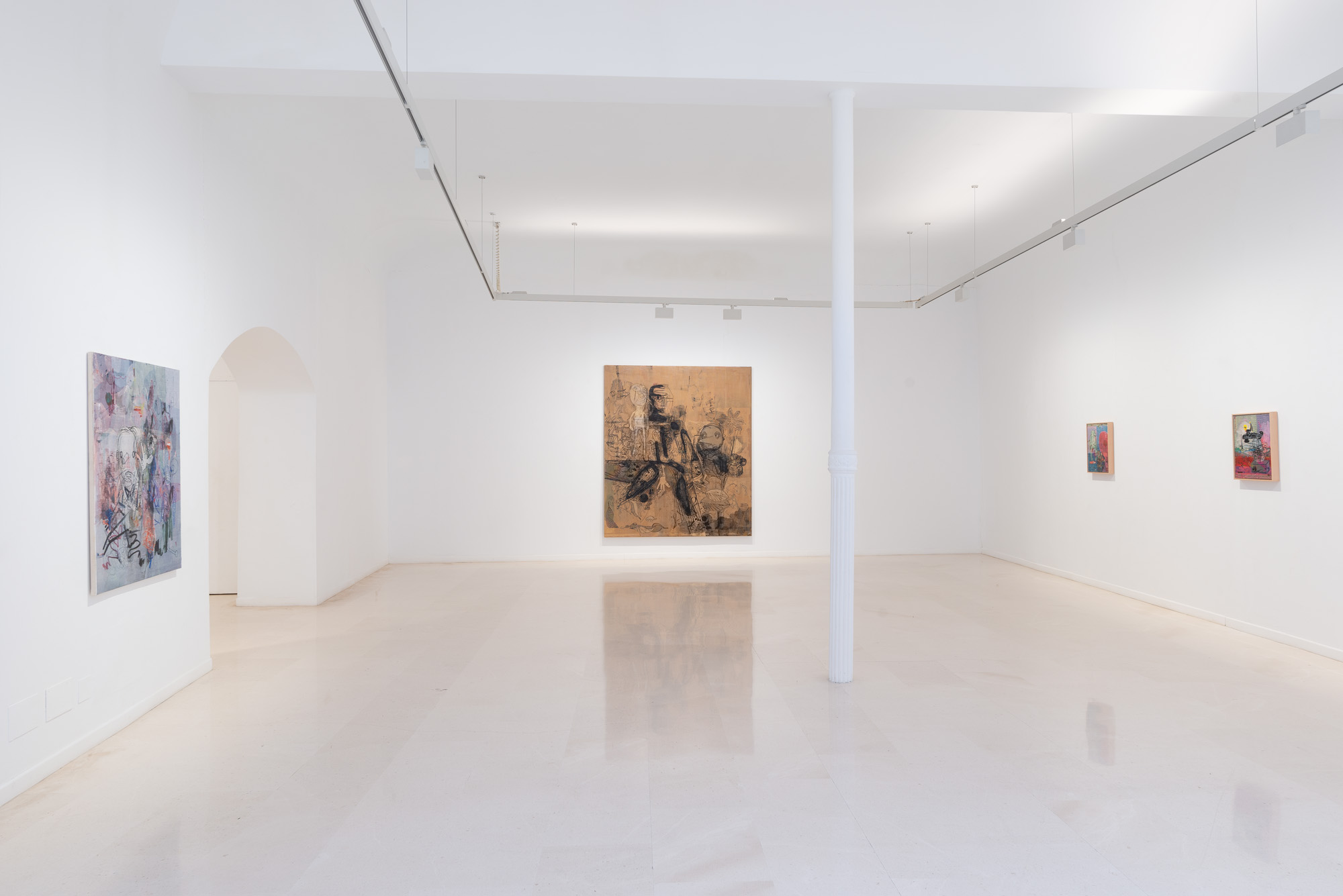
In his first exhibition at Galería Pelaires in Palma de Mallorca, Markus Oehlen presents a new group of works from 2026. The works—primarily acrylic and paper on canvas—are at first marked by a surprising calm.
Many of the pictorial surfaces seem at first glance reduced, almost restrained. But the longer one looks, the more clearly their complex internal structures emerge.
Here, Oehlen works with fine linear systems, grids, and networks that run across the surface of the canvas. These structures recall graphic notations, digital grids, or technical drawings, though they never remain purely systematic.
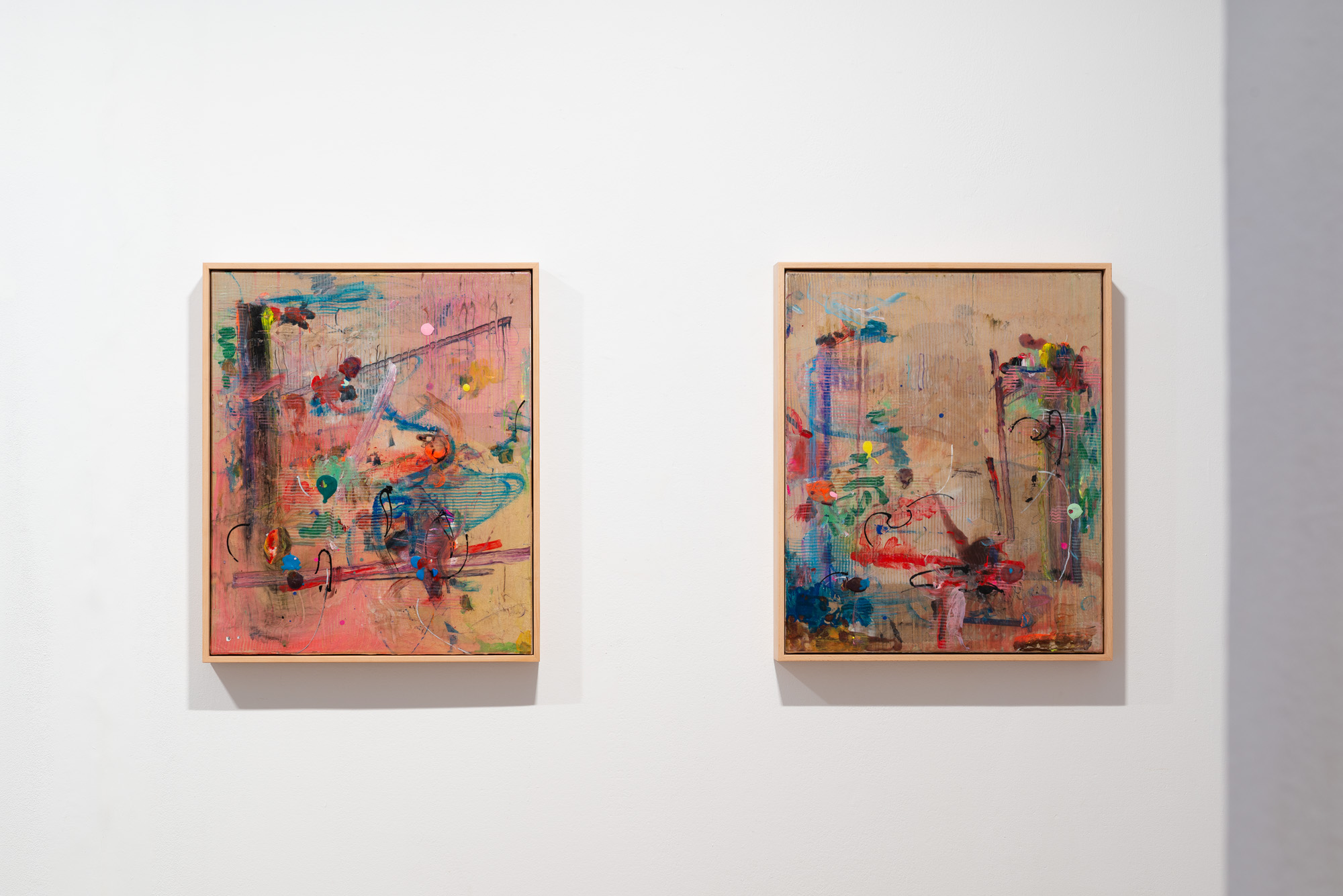
Again and again, they are interrupted by painterly interventions: small points of color, delicate lines, or fragmentary forms. In this way, a pictorial space emerges that is at once precise and surprisingly open.
Palimpsests of painting
Many of the new works possess a particular quality of stratification. They function as palimpsests: surfaces upon which different layers of the pictorial process overlap.
Beneath the visible structure, secondary orders appear: earlier movements, hidden image skeletons, discreet traces of previous decisions. Painting here becomes a visible temporal process.
It is precisely these sensitive and refined stratifications that give the works their singular delicacy. The images do not reveal themselves in a single glance; they unfold slowly, in the rhythm of contemplation.
Open pictorial spaces
The new works presented at Galería Pelaires reveal a painting of great sensitivity and concentration. Here, Markus Oehlen develops pictorial spaces that are neither fully abstract nor clearly figurative.
Rather, complex and finely layered surfaces emerge in which different levels of perception overlap.
His paintings remain deliberately open. They are not conclusive statements, but spaces of possibility: fragile visual configurations in which system and intuition, structure and improvisation, order and freedom intertwine.
Painting does not begin with an image, but with movement.
From the sonic to the silent and back.
To the sound of painting.
To the painterly sound of Markus Oehlen.
_____
Markus Oehlen (Krefeld, 1956) lives and works in Munich. He studied at the Kunstakademie Düsseldorf from 1976 to 1982 and is a founding member of the German Neo-Expressionist movement Junge Wilde (Young Wild Ones). Emerging in the early 1980s, he was part of a generation that included artists such as Martin Kippenberger, Georg Herold, and Werner Büttner, whose work adopted a critical stance toward the dominant ideologies of the time and rejected the formal purity of Minimalism and Conceptual art.
During the 1970s and 1980s, alongside his brother Albert Oehlen and other contemporaries, the Junge Wilde advocated for a raw, emotionally charged painting that reintroduced countercultural energy and expressive chaos—both on and off the canvas—recalling the spirit of the Fauves. Music has been central to Oehlen's practice from the outset: deeply engaged with punk and experimental sound, he performed in bands such as Mittagspause. Influences ranging from rock and punk to electronic music and Karlheinz Stockhausen continue to inform his artistic approach.
Over a career spanning more than four decades, Oehlen's work has encompassed painting, sculpture, digital drawing, and music. His paintings often function as palimpsests, composed of layered and heterogeneous motifs that create a striking visual impact. Drawing on Op Art, he combines rigorous geometric structures with sharp, dynamic curves that generate optical tension.
Although he has acknowledged the early influence of Sigmar Polke, Oehlen has consistently maintained an independent position in relation to prevailing movements, even when grouped with the expressive tendencies of the 1980s. Often associated with a post-pop sensibility, his work draws on classical genres such as still life, landscape, and portraiture, yet avoids explicit narrative. Instead, he seeks to evoke atmospheres and emotional intensities, deliberately resisting fixed interpretations and encouraging viewers to construct their own readings.
Oehlen has presented solo exhibitions at institutions including the Künstlerhaus Hamburg; the Museum of Modern Art, New York (with Georg Herold); the Universidad Internacional Menéndez Pelayo (with Albert Oehlen); and the Kunstsammlung Chemnitz. His work has also been featured in group exhibitions at major institutions such as the Nationalgalerie Berlin and the ZKM Karlsruhe, underscoring a career defined by sustained experimentation and critical engagement with the boundaries of painting.
La Galeria Pelaires ha rebut una subvenció del Consell de Mallorca per a la realització d'aquesta exposició.