From June 4th to September 11th, 2026
First individual exhibition by Jiri Georg Dokoupil at Galeria Pelaires
The Bursting of the Bubble
by Christoph Steinmeyer
What is painting?
Perhaps nothing more than applied structure on a surface. Organized matter. A relationship between color, time, surface, process, and chance shaped through aesthetic decision.
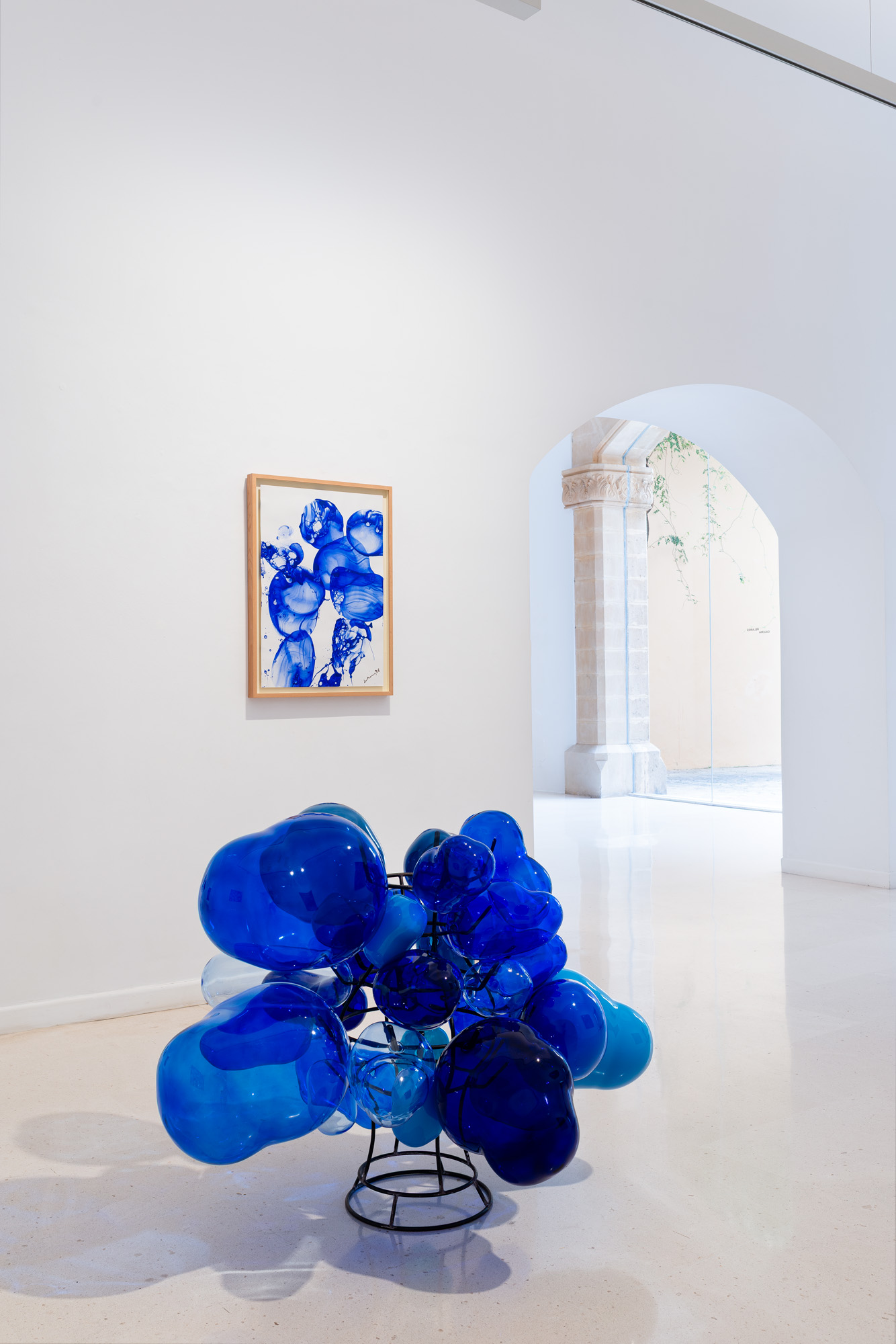
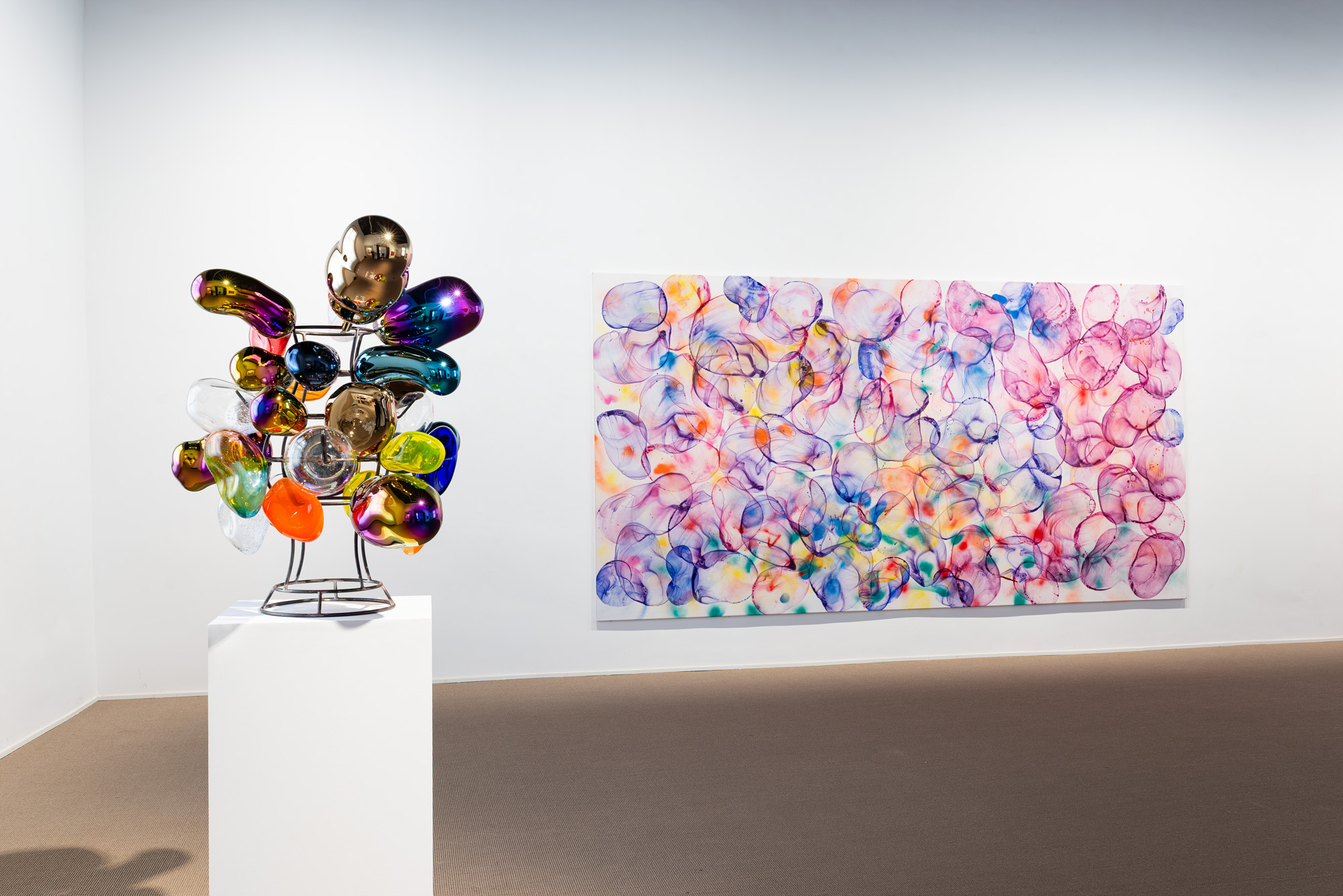
Since the early 1980s, Georg Dokoupil has explored the limits of painterly possibility, creating a body of work that consistently resists clear art historical categorization. Again and again, he turns to materials and processes that appear at once archaic and experimental. If his soot paintings inevitably evoke cave painting, elemental traces of early image-making, and humanity's first attempts to make the world visible through signs, his soap bubble paintings simultaneously reveal an almost childlike joy of discovery — the playful yet highly precise invention of ever new painterly possibilities within a medium developed by himself.
Dokoupil is therefore not merely a painter, but also an inventor and discoverer. An inventor because he develops processes that did not previously exist in this form. A discoverer because these processes generate visual worlds that remain never entirely controllable, even for him, and whose final appearance only becomes visible through the act of their making.
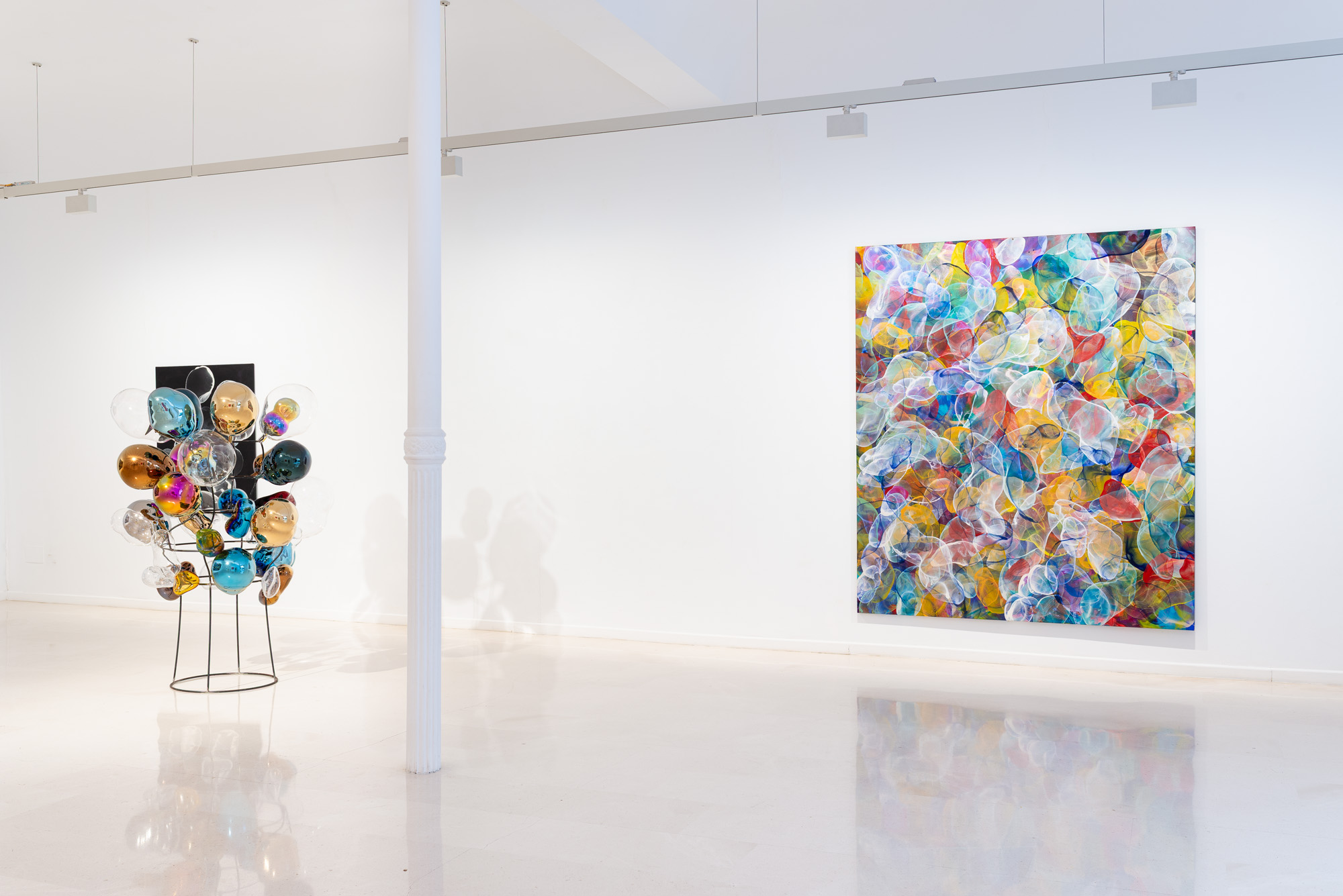
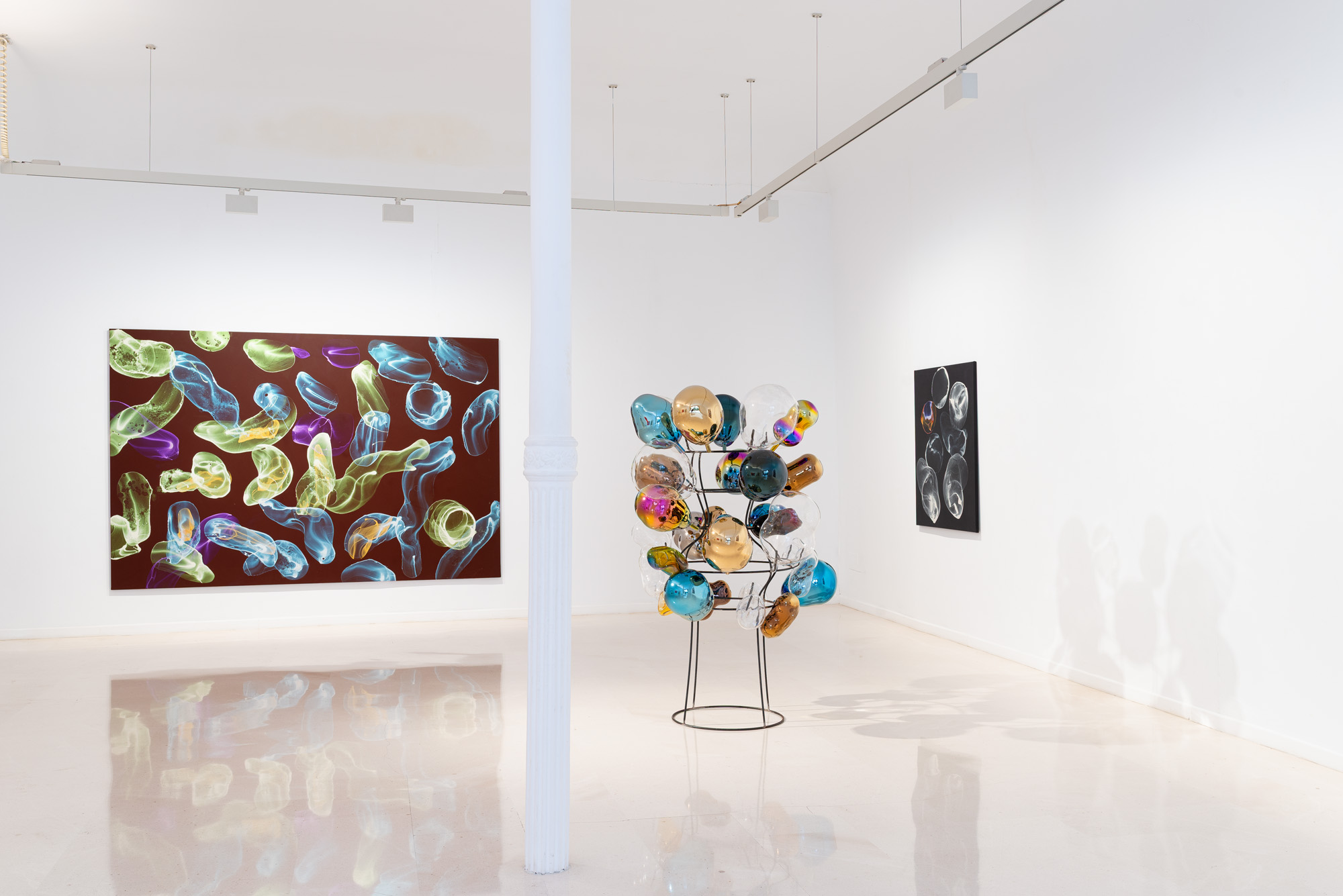
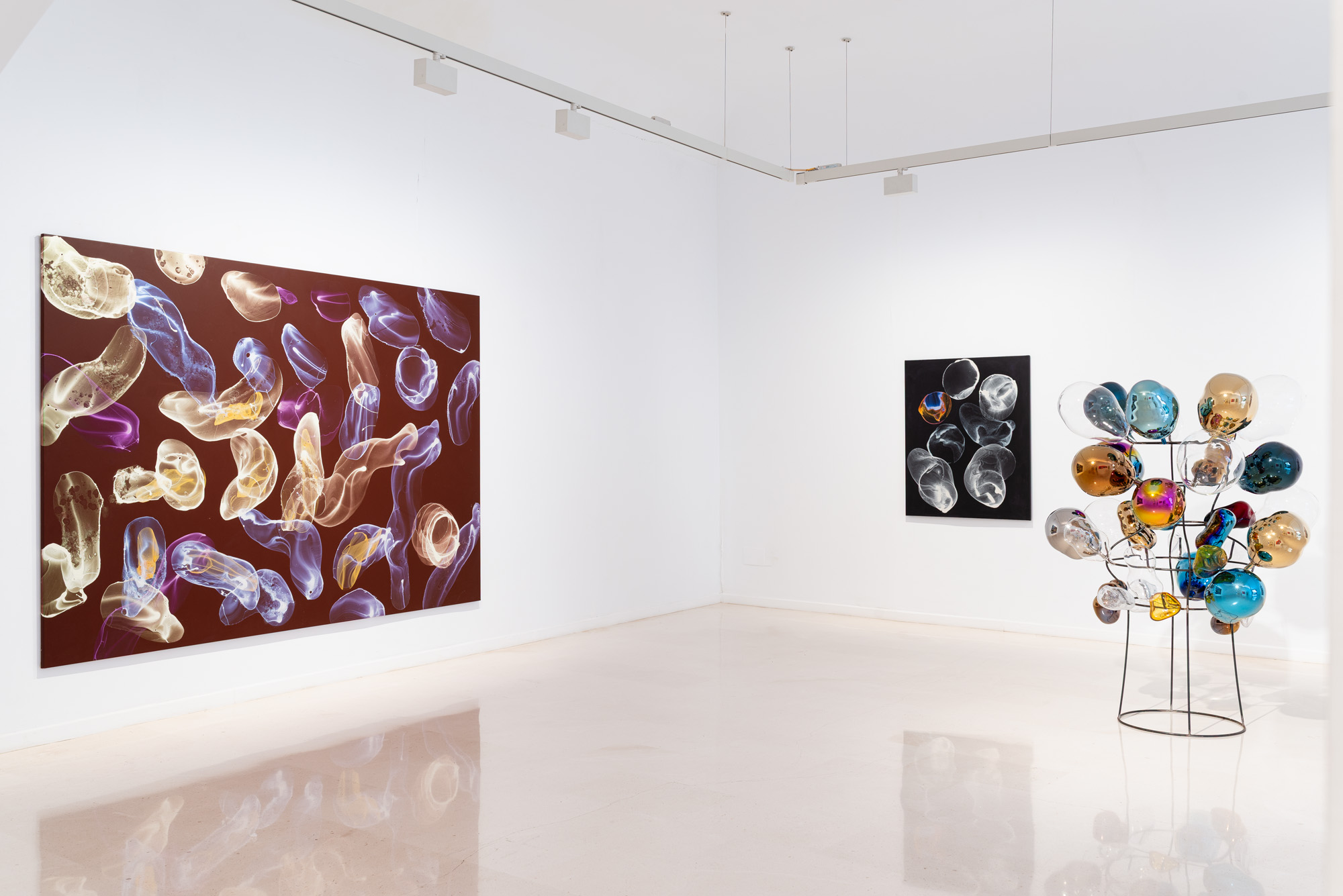
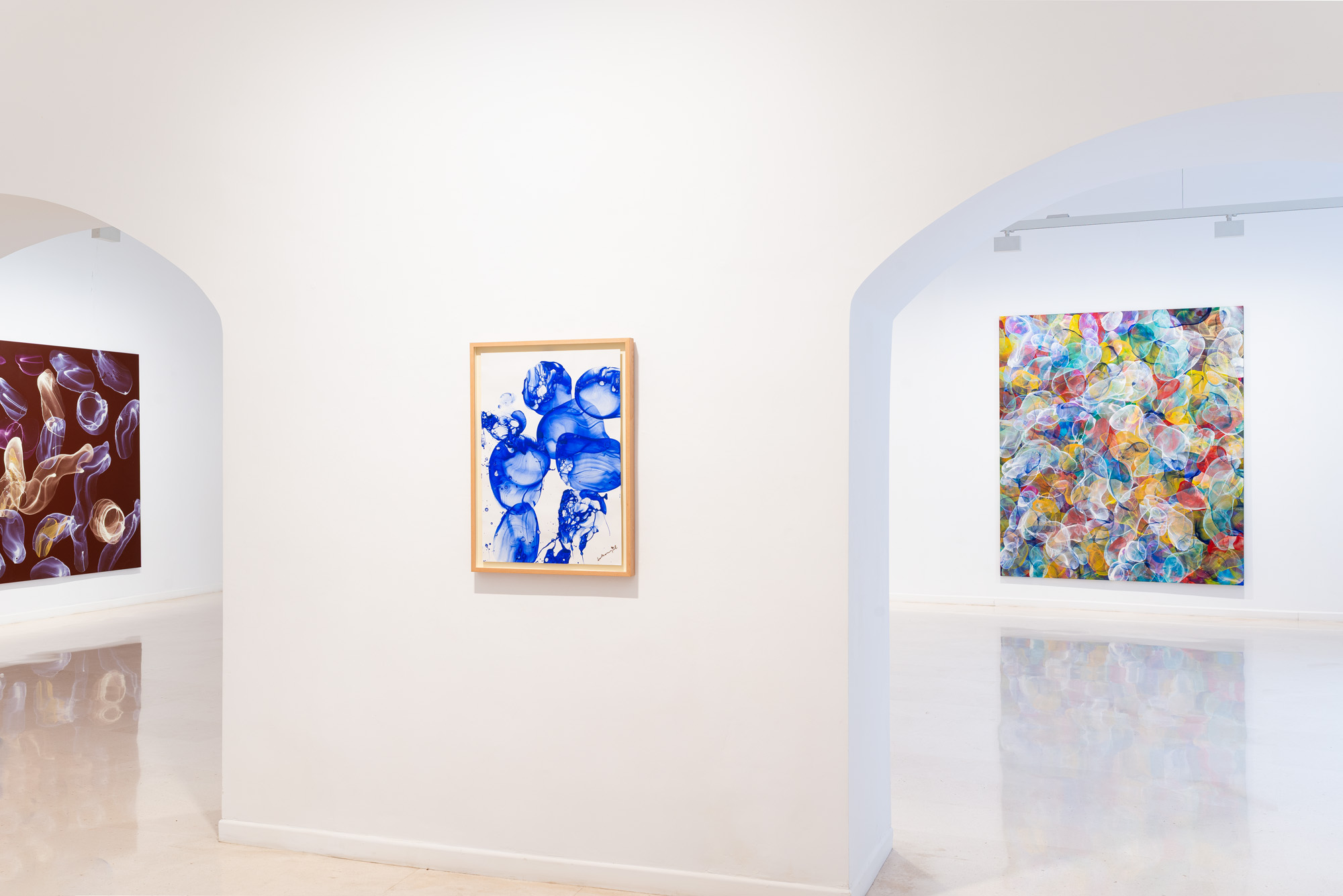
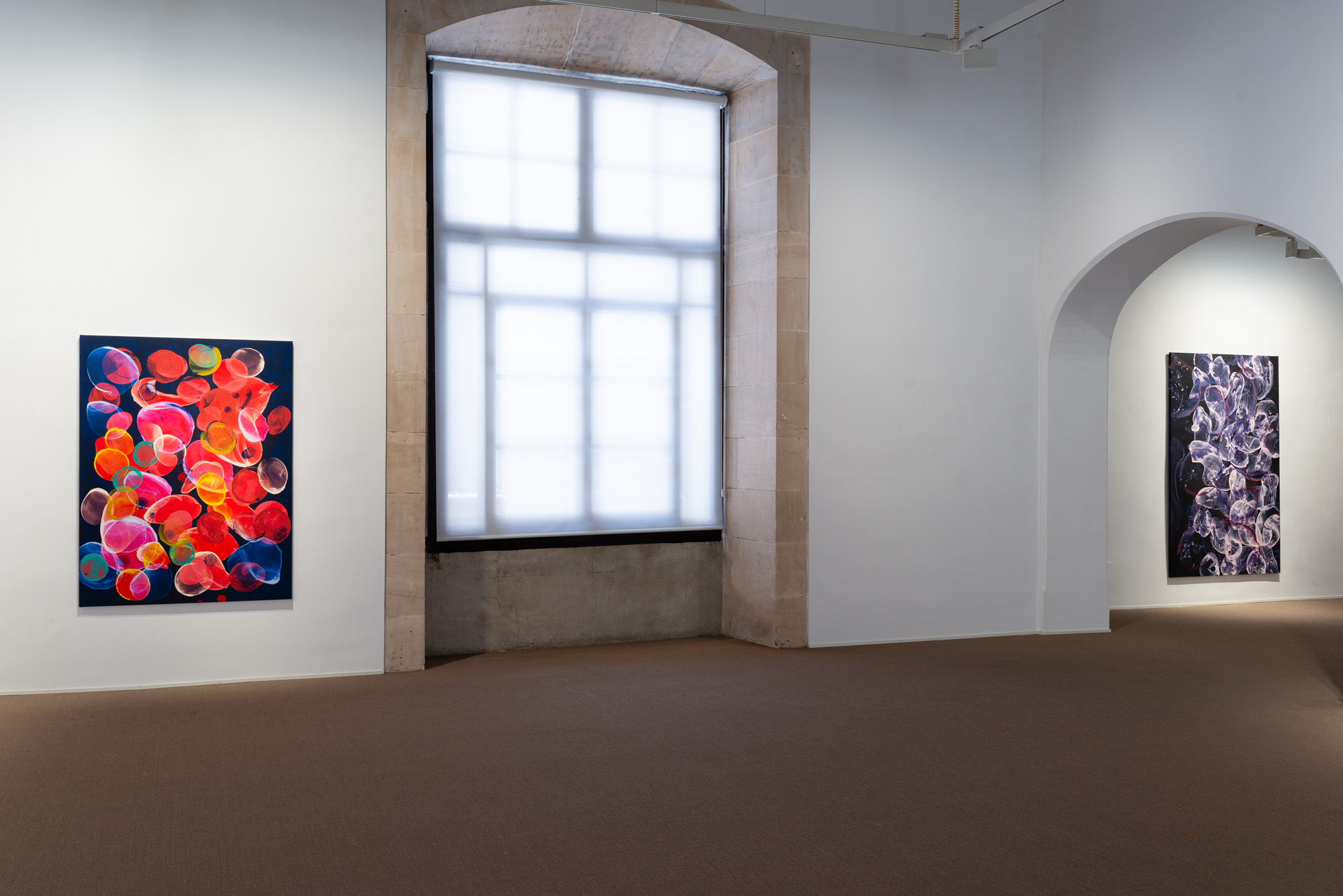
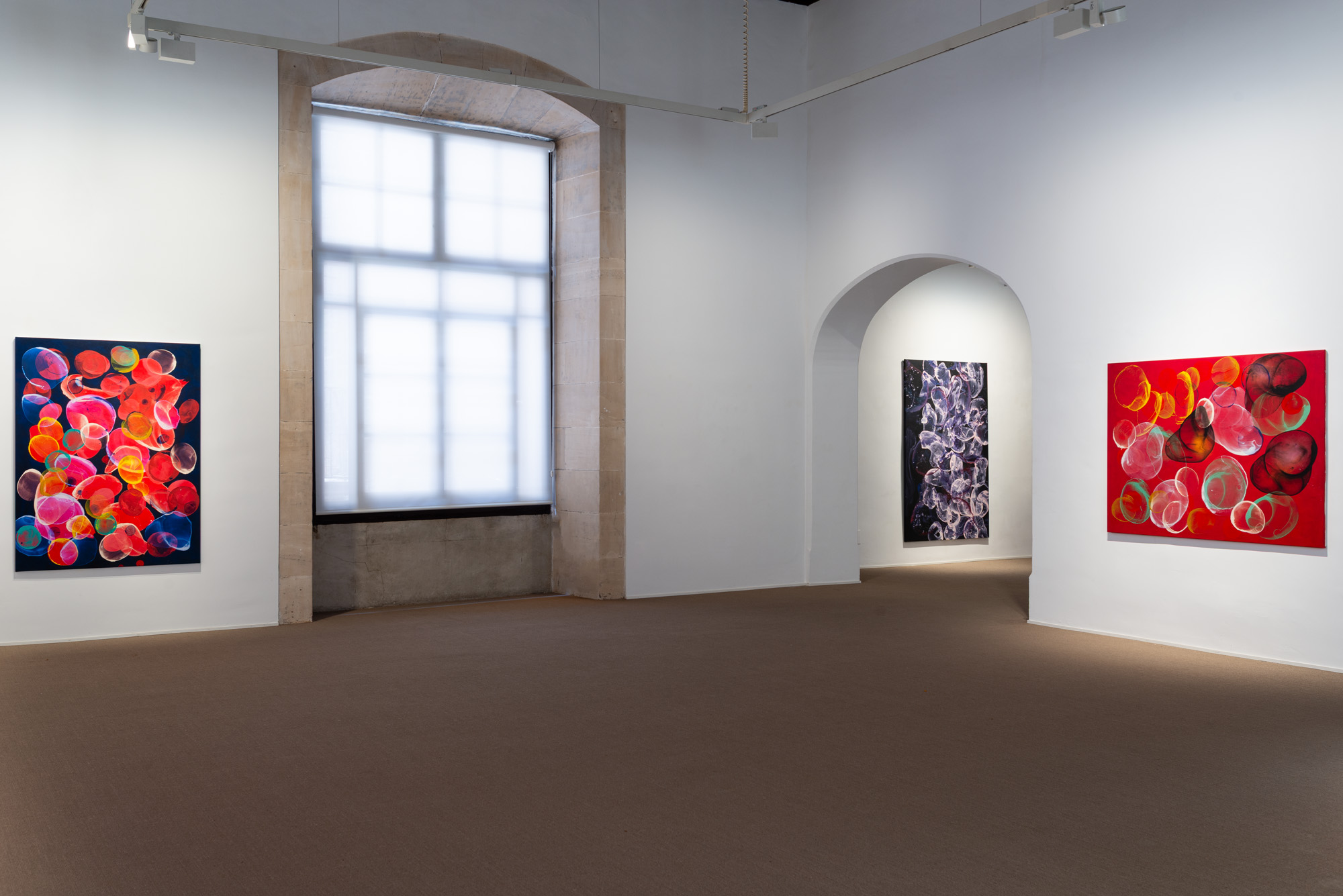
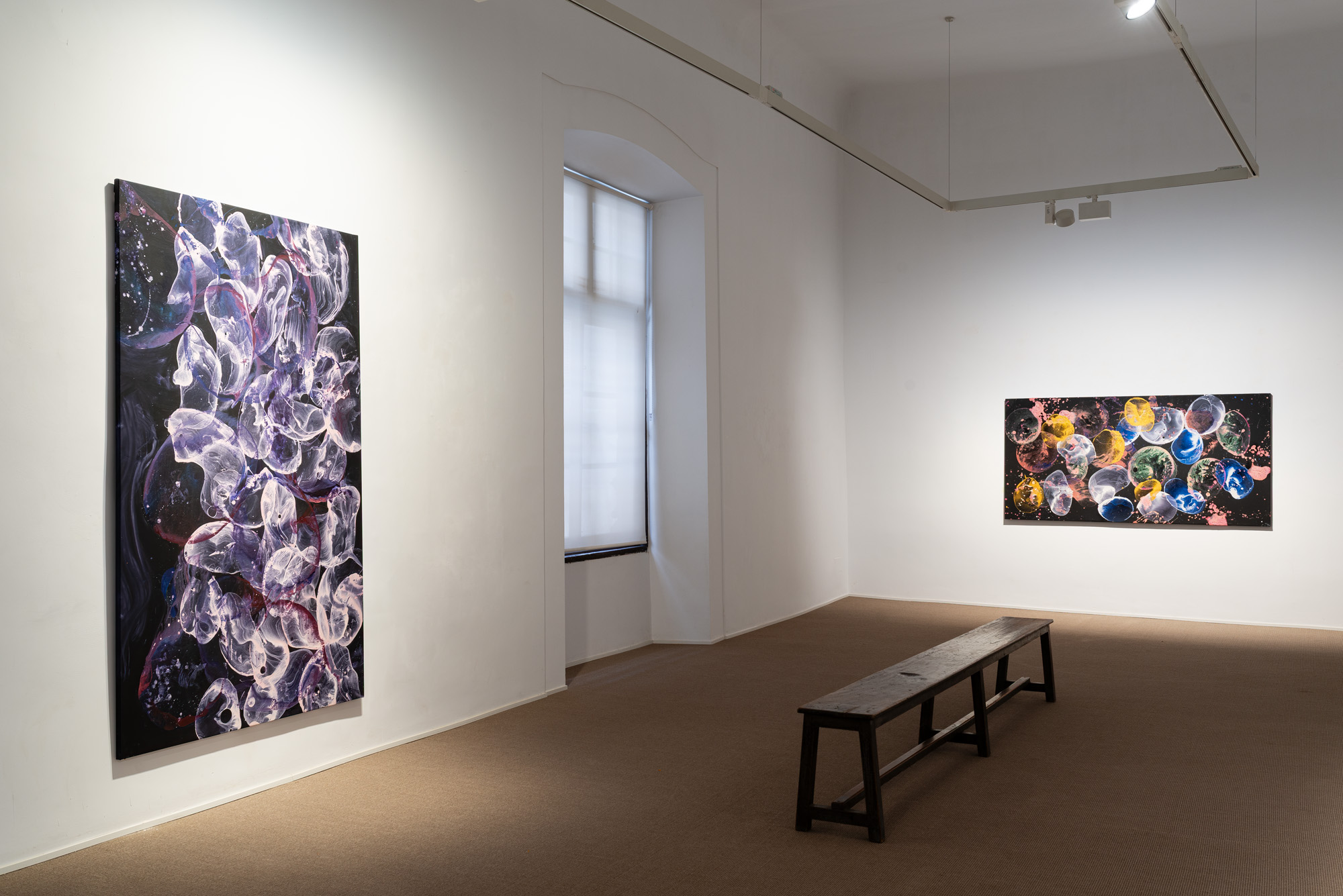
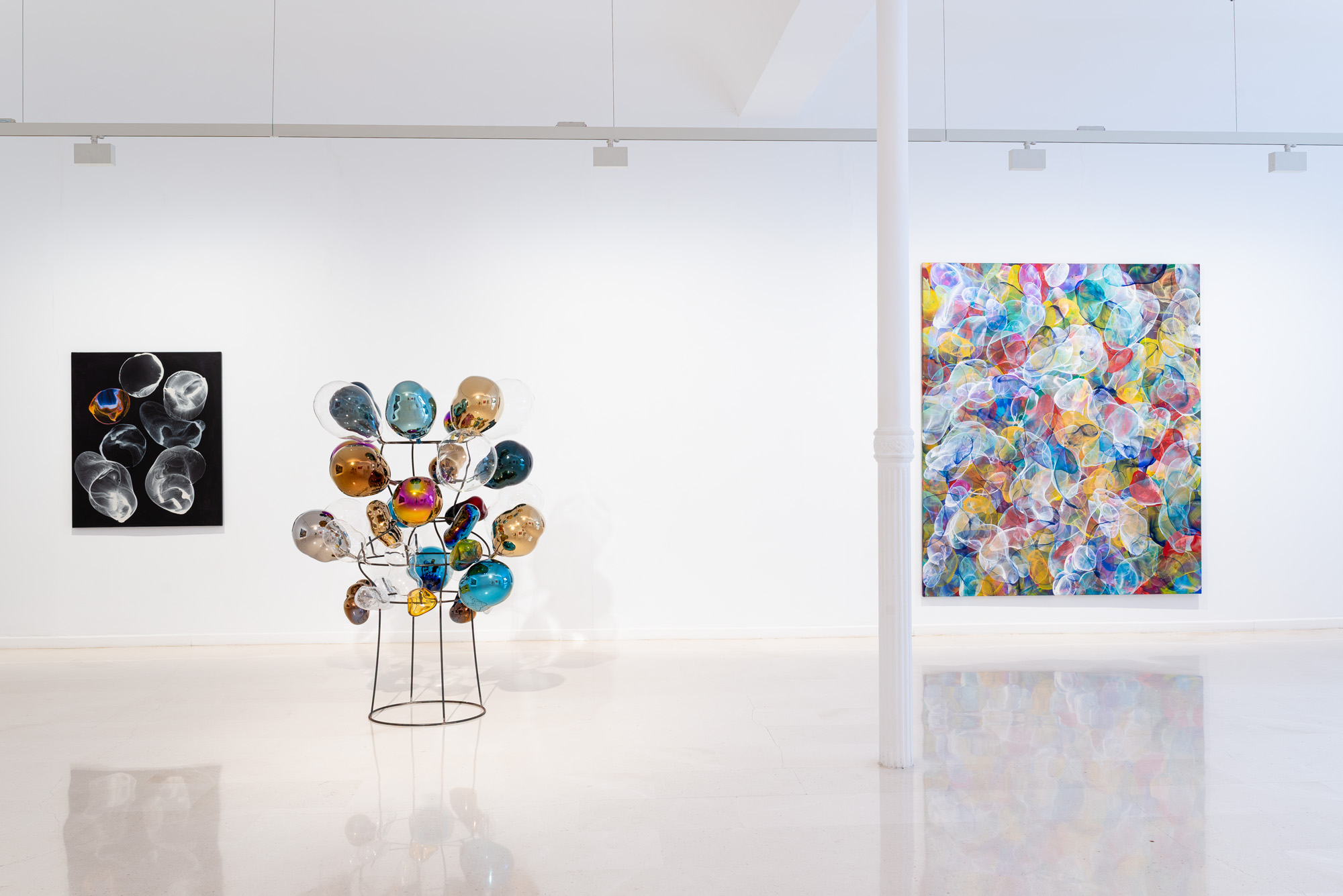
More than thirty years ago, Dokoupil developed his technique of soap bubble paintings. Using soap solution, he absorbs pigments and transfers them onto the canvas in the form of large, color-filled bubbles that burst and leave behind their traces. Guided by his hand, mixed and controlled through his own "soap palette," these processes nevertheless remain permanently exposed to chance. Controlled non-control. Directed chance. Guided chaos.
These are paintings that appear almost to paint themselves — and yet could never exist without him. Even where chance becomes visible, each work remains entirely dependent on his decisions: color, density, rhythm, format, materiality, surface structure, and the precise moment of intervention or release.
It is precisely here that these works occupy their singular place within the history of painting. Dokoupil's images radically renegotiate central questions of modernism: Action Painting meets conceptual art, expressive gesture meets seriality, punk meets painterly meditation, individuality meets repetition and non-individuality.
And yet these works ultimately evade any stable art historical category. Rather, Dokoupil's paintings are meta-images. They do not depict something outside themselves, but instead make their own process of becoming their content. What is seen here is not the representation or abstraction of a bursting soap bubble — the real event itself IS the image. Action and motif collapse entirely into one another. The trace of color IS the trace of the bubble. The stain IS the event. The image IS the process.
It is precisely for this reason that these works appear simultaneously abstract and not abstract. They possess no classical figuration, and yet abstract nothing from an external reality, because motif and appearance become identical. A bubble is a bubble is a bubble.
Painting here seems to observe itself in the act of coming into being. And therein lies the peculiar radicality of these works. Dokoupil pushes painting toward a point at which it is no longer primarily representation or expression, but physical event. The viewer no longer looks at an image of movement, energy, or chance — but at their actual trace.
What emerges are visual worlds of enormous sensual presence and, at the same time, surprising conceptual precision. Paintings that refer entirely to their own materiality and process of formation, and which thereby unfold an almost overwhelming visual and emotional force.
And when one of these color-filled bubbles bursts upon the canvas, it is filled with surprise. Perhaps as filled with surprise as that first drop of water must have appeared to the lens grinder who looked at it for the first time through a microscope.
Dokoupil's paintings are like that drop. Not the depiction of a world. But the discovery of a new way of seeing it. The opening of an autonomous world inside a color-filled bubble.
Plopp!
____
Jirí Georg Dokoupil (Krnov, former Czechoslovakia,1954). After the invasion of the Soviet army in Prague in 1968, he fled with his family to Germany.
From 1976 to 1978, Dokoupil studied fine arts in Cologne, Frankfurt am Main and in New York at The Cooper Union with the conceptual artist Hans Haacke. Dokoupil was founding-member of the German artist groups Mülheimer Freiheit and Junge Wilde, which arose in the late 1970s and early 1980s. The group was associated with the legendary art dealer Paul Maenz who organized Dokoupil's first solo exhibition in Cologne in 1982. In their shared studio in Cologne on a street named Mülheimer Freiheit, the Junge Wilde sought to explore a contemporary expression for their art by using a neo-expressive, figurative style of intensely colorful painting with traditional subjects and by overriding the intellectual, reduced formal language of Minimal and Conceptual Art. Dokoupil also taught as a guest professor at the Academy of Fine Arts of Düsseldorf from 1983 to 1984 and in Madrid during 1989.
Dokoupil developed a less wild, rather unusual working method and soon found his own radical subjective way with individual considerations. With his "book painting" shown at documenta 7 in Kassel in 1982, Dokoupil widely attracted the attention of the art world. Since then besides the early group exhibitions with the Mülheimer Freiheit Dokoupil's work has been seen in numerous one-man shows in galleries, museums and at other cultural sites worldwide.
His work has been the subject of numerous solo exhibitions at major institutions, including Osthaus Museum Hagen (2021, 2024), Biblioteca Nazionale Marciana in Venice (2024), Deichtorhallen Hamburg, Museu de Arte Moderna São Paulo, Palacio de Velázquez in Madrid, Museum Moderner Kunst Stiftung Ludwig in Vienna, and the Groninger Museum, among others. He has also participated in significant international group exhibitions such as the Venice Biennale (1987), documenta 7, Zeitgeist in Berlin (1982), and the Jinan International Biennale (2022).
He has received several awards, including the Lovis Corinth Prize (2012) and the Karl Ernst Osthaus Prize (2024).
Dokoupil's work is held in major public collections worldwide, including the Centre Pompidou in Paris, Museo Nacional Centro de Arte Reina Sofía in Madrid, Hamburger Bahnhof in Berlin, Museum Ludwig in Cologne, Kunsthaus Zürich, Museum Boijmans Van Beuningen in Rotterdam, and the Hammer Museum in Los Angeles, among many others.
La Galeria Pelaires ha rebut una subvenció del Consell de Mallorca per a la realització d'aquesta exposició.