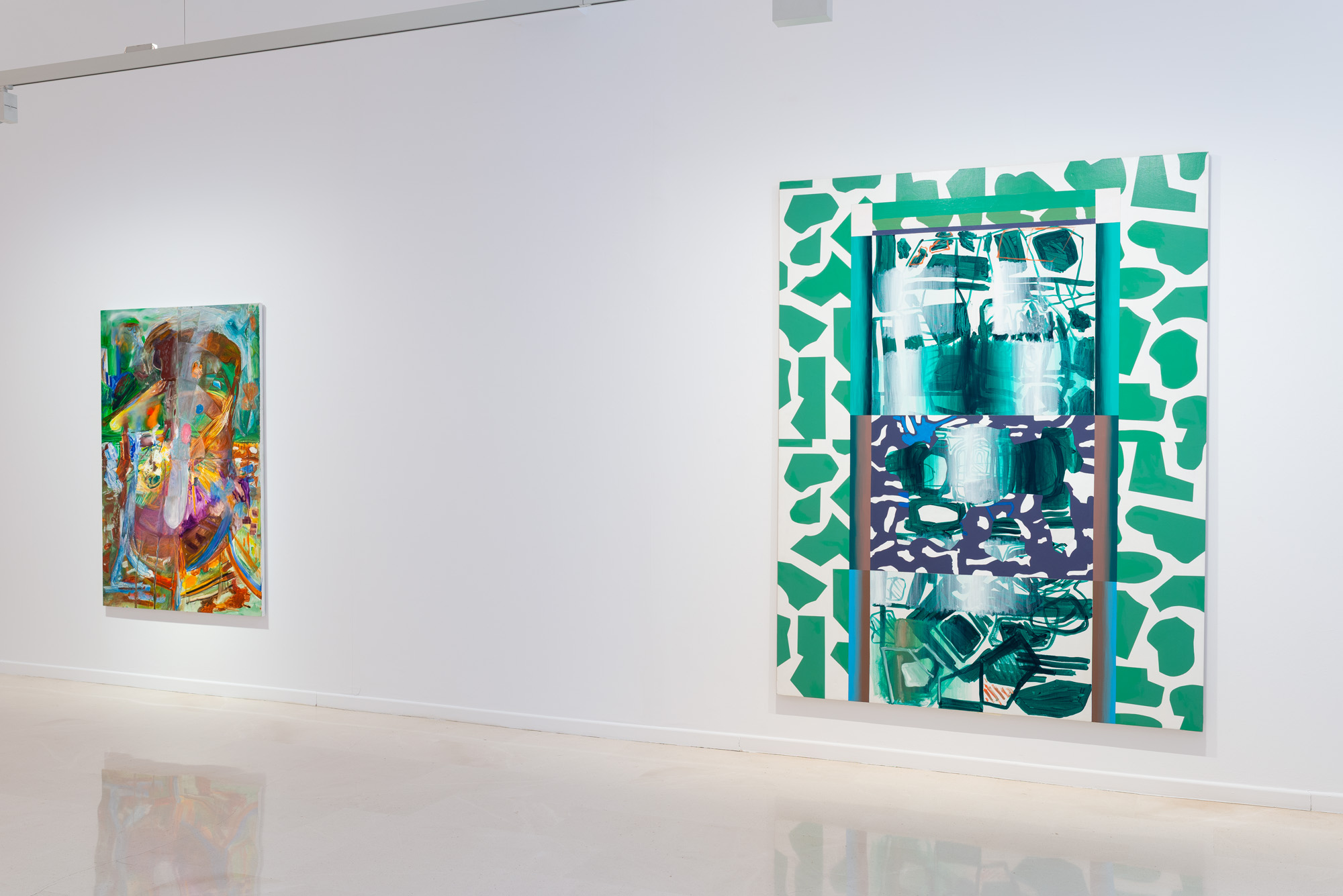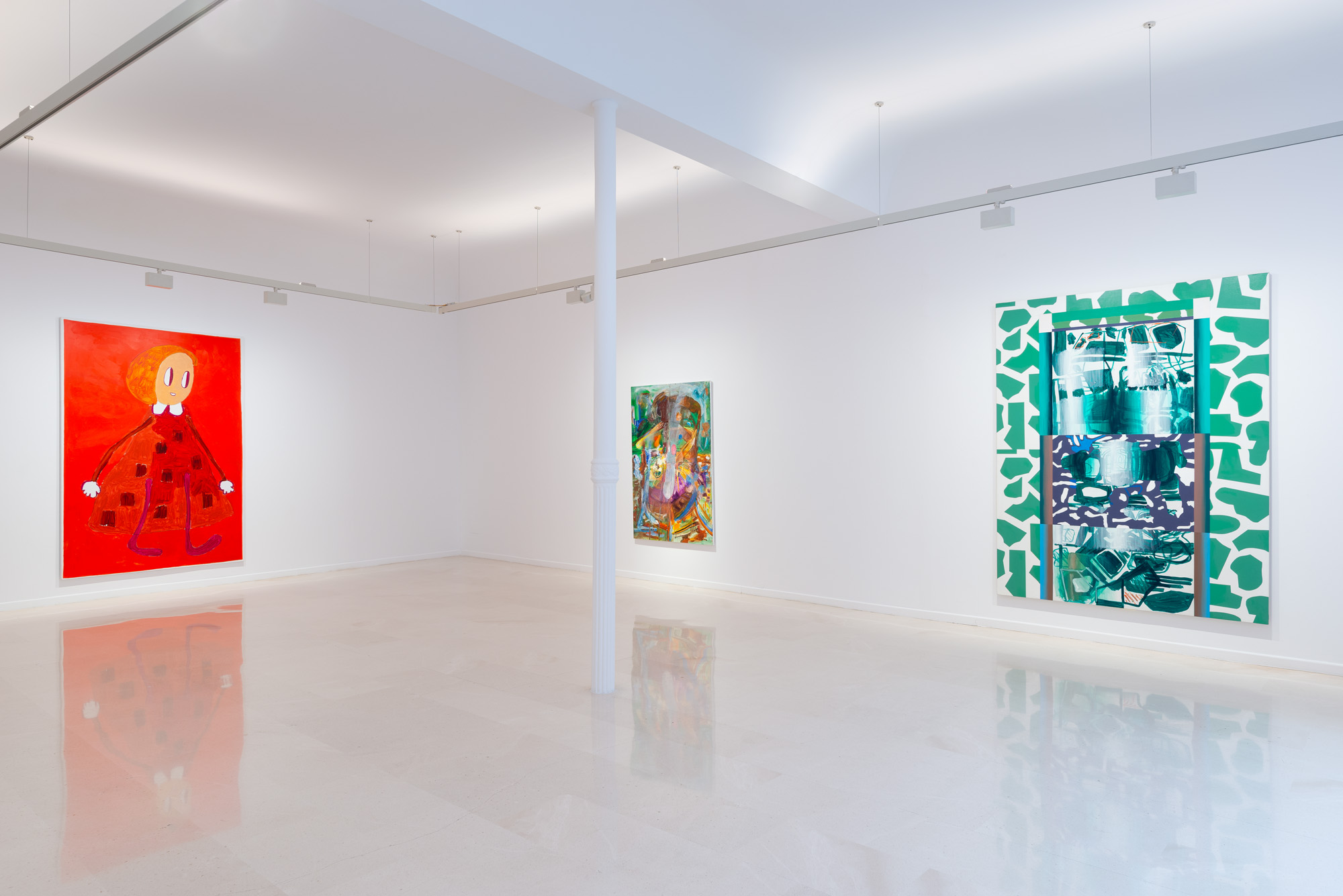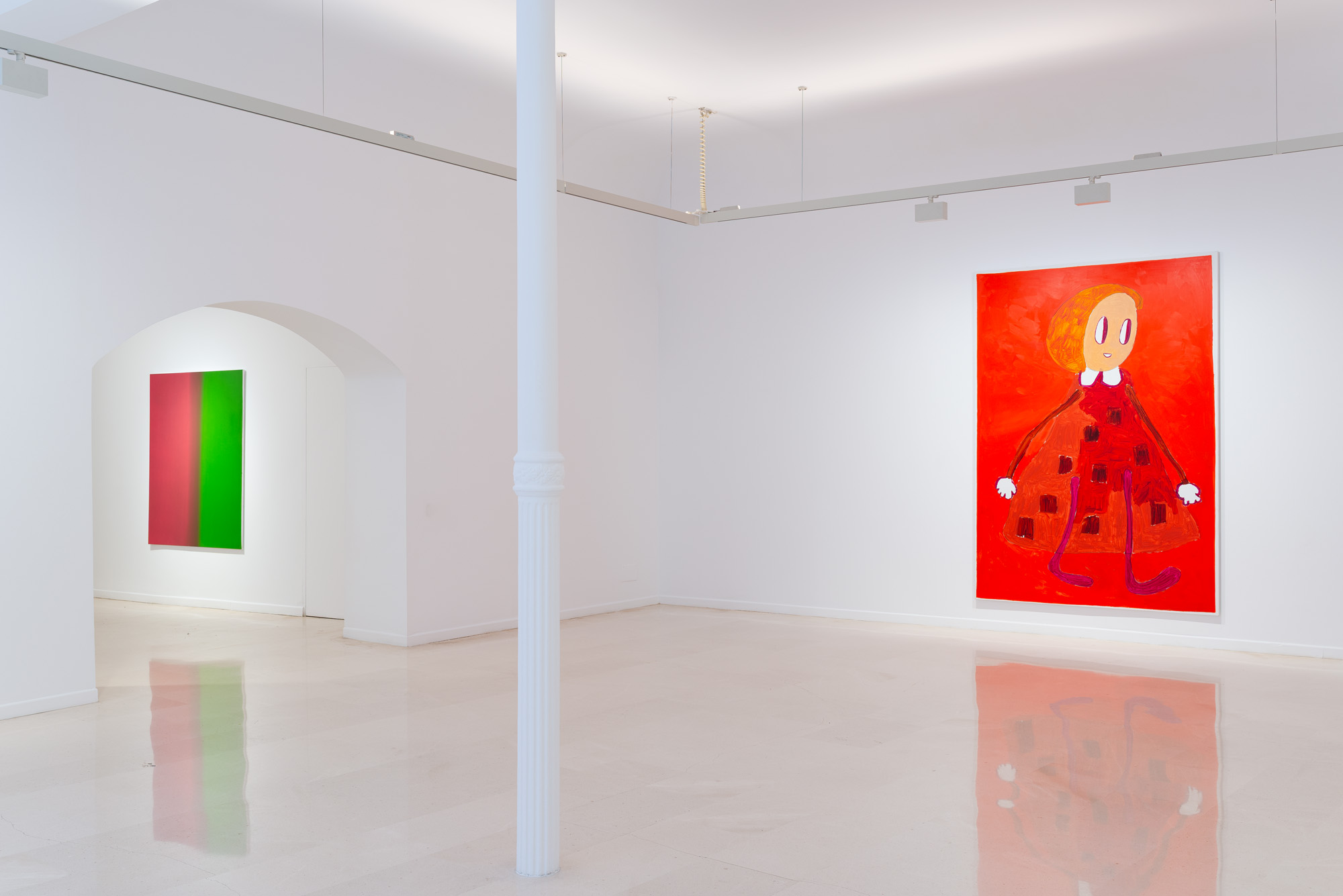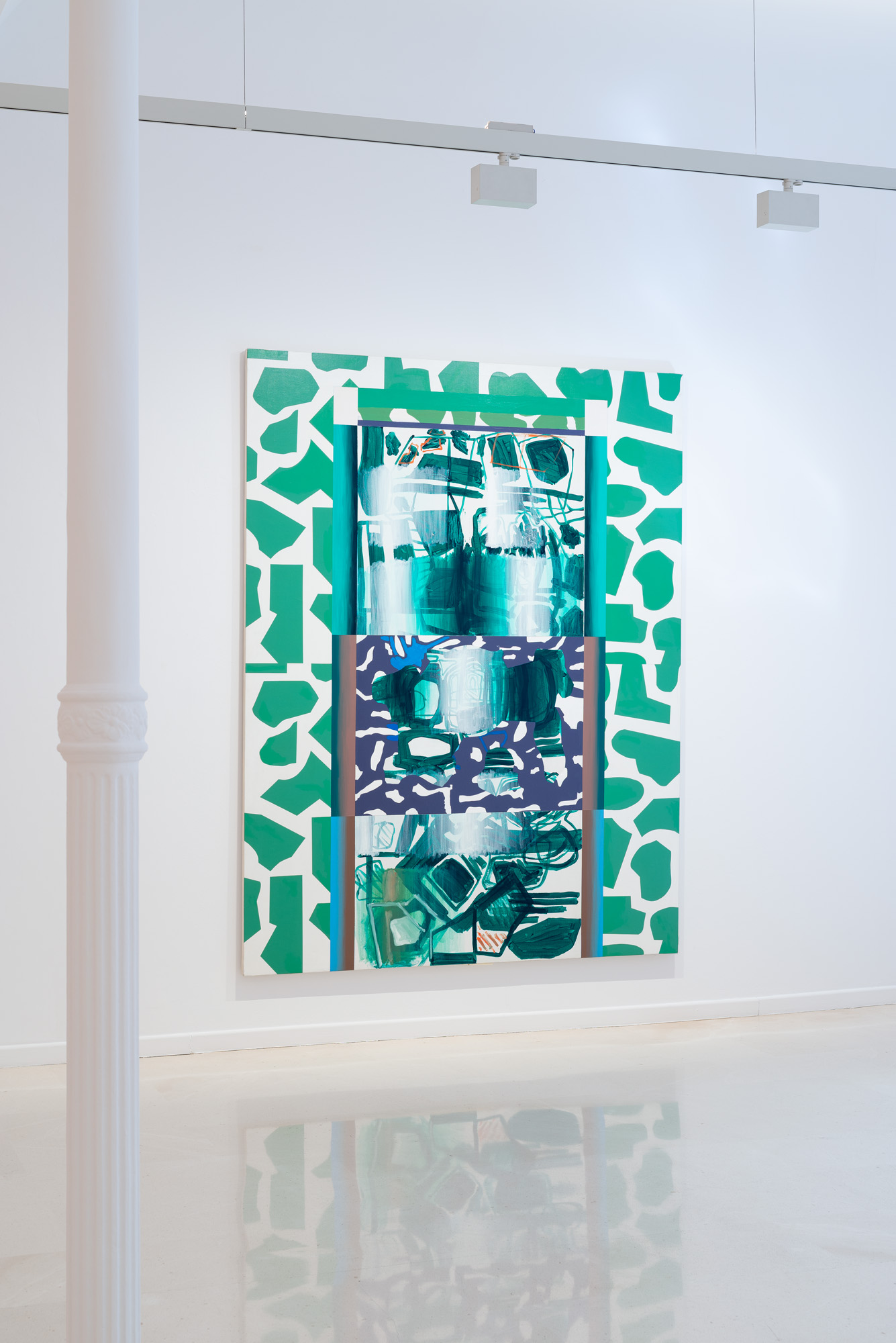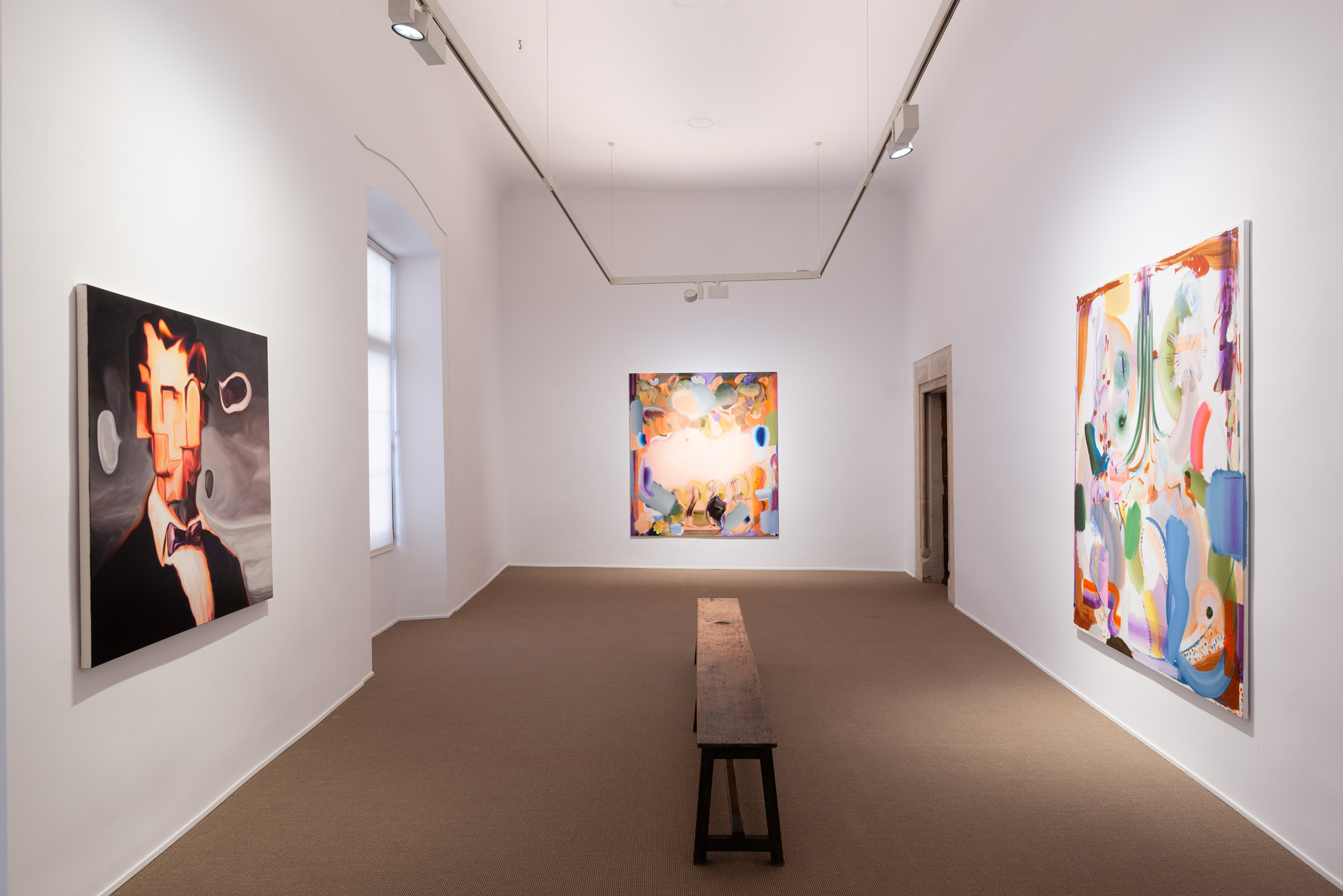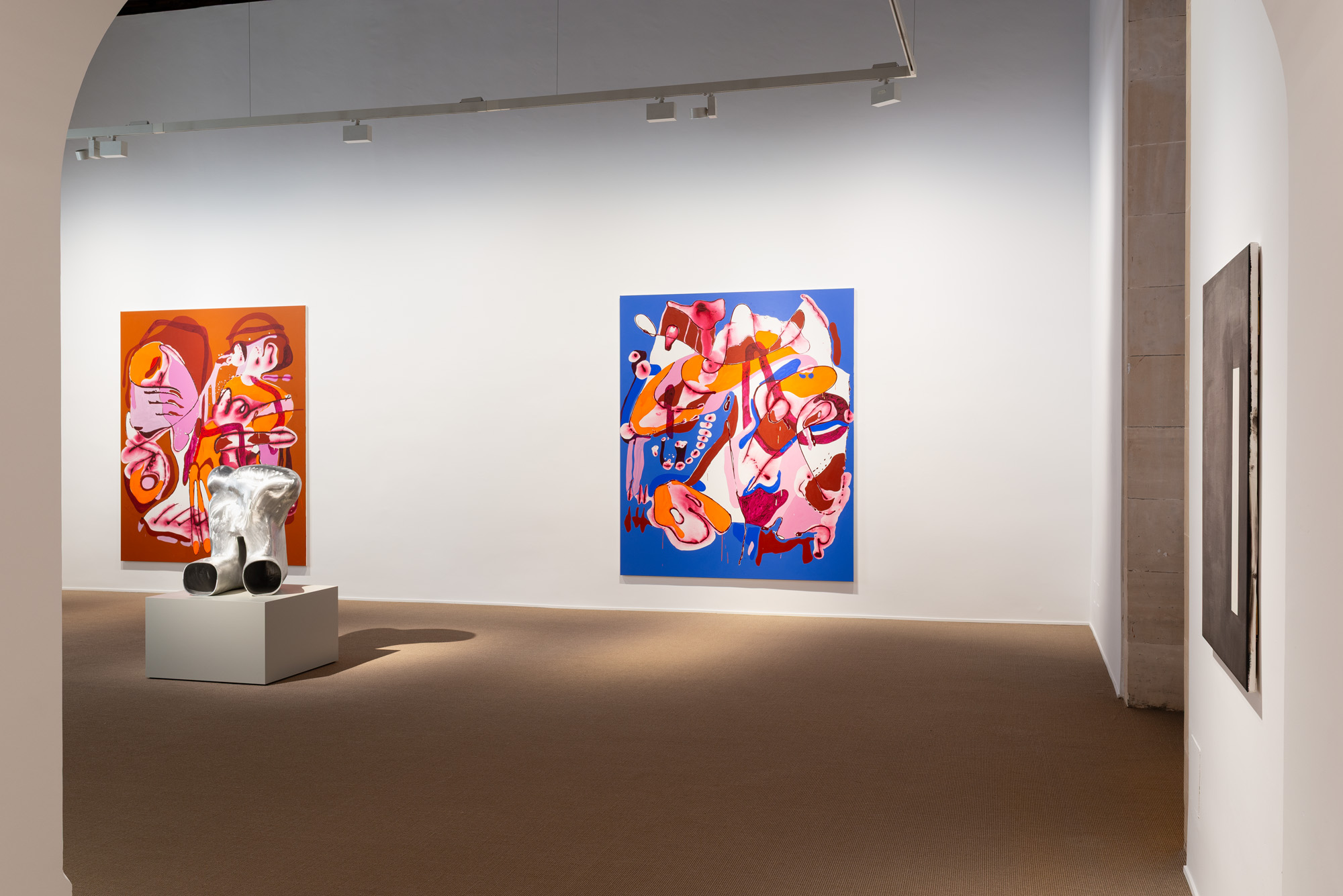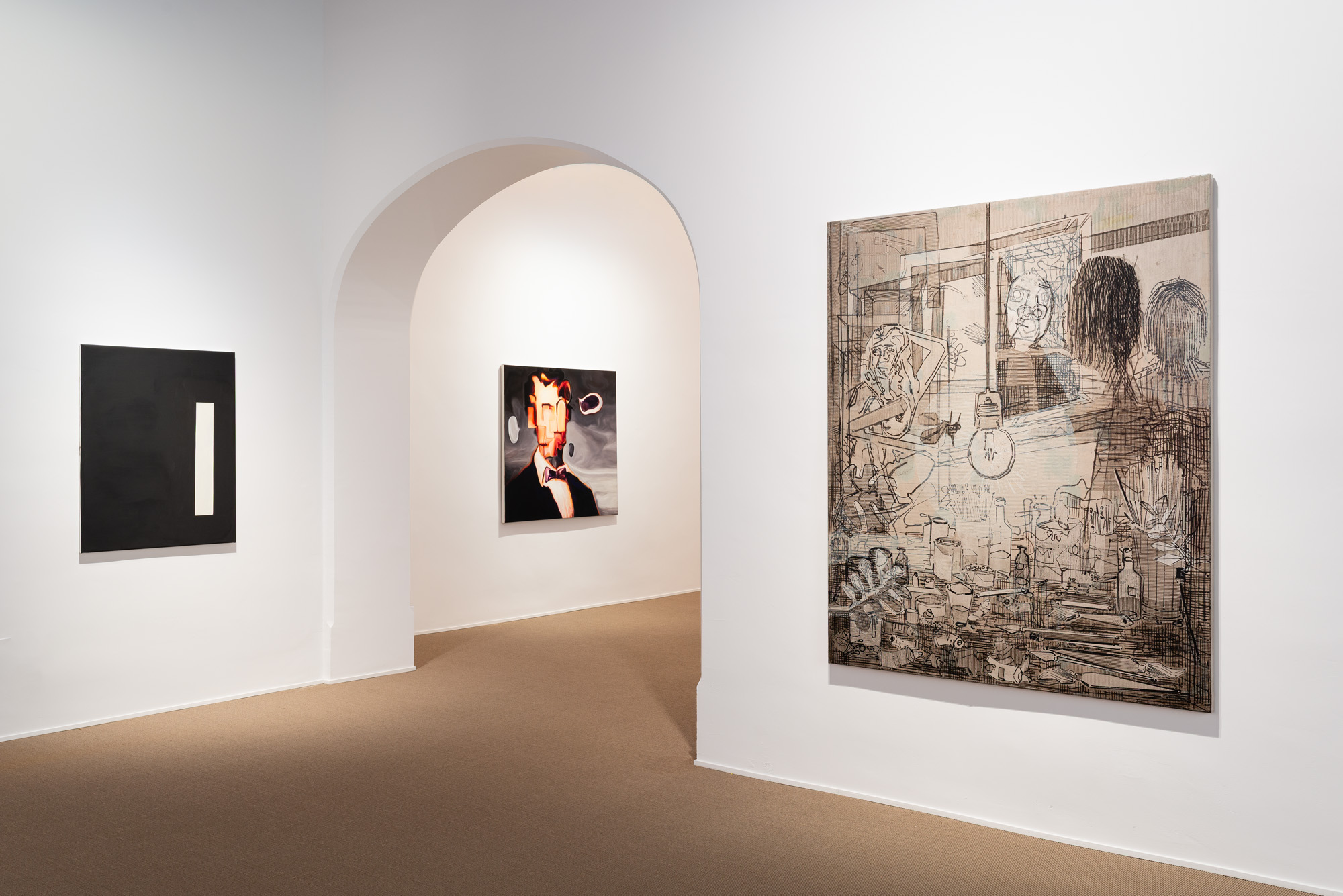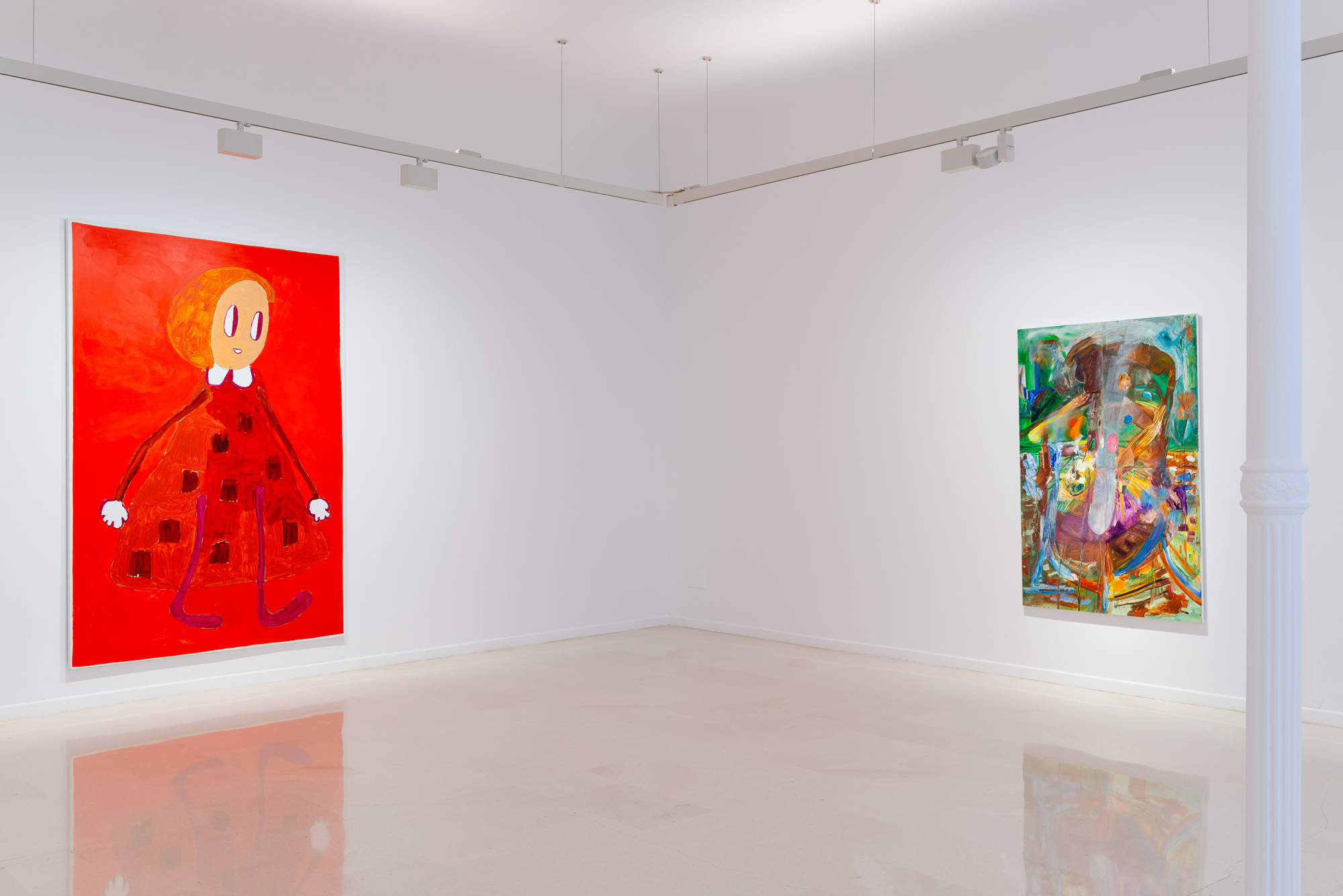
From September 19 to December 12, 2026
Group exhibition on the main floor and ground floor
Curator: Christoph Steinmeyer
Espinturalidad
text by by Christian Domínguez
No one remembers the exact moment when an image begins to exist. There is a moment when it is not yet a figure. Nor is it an abstraction. It is barely a possibility. A slight displacement. A vibration. Something that does not yet know the name it will eventually be given. Every truly living painting preserves that moment.
Can painting, and especially the painting brought together here, offer an experience that goes beyond the visible? Can it fulfil what the title "Espinturalidad" promises? If that title is to be more than a simple metaphor, if it is to give a name to an experience, the question is unavoidable. And where does that experience actually take place? In the painting, in the person who creates it, in the person who contemplates it, or in something that appears only when all three enter into relation?
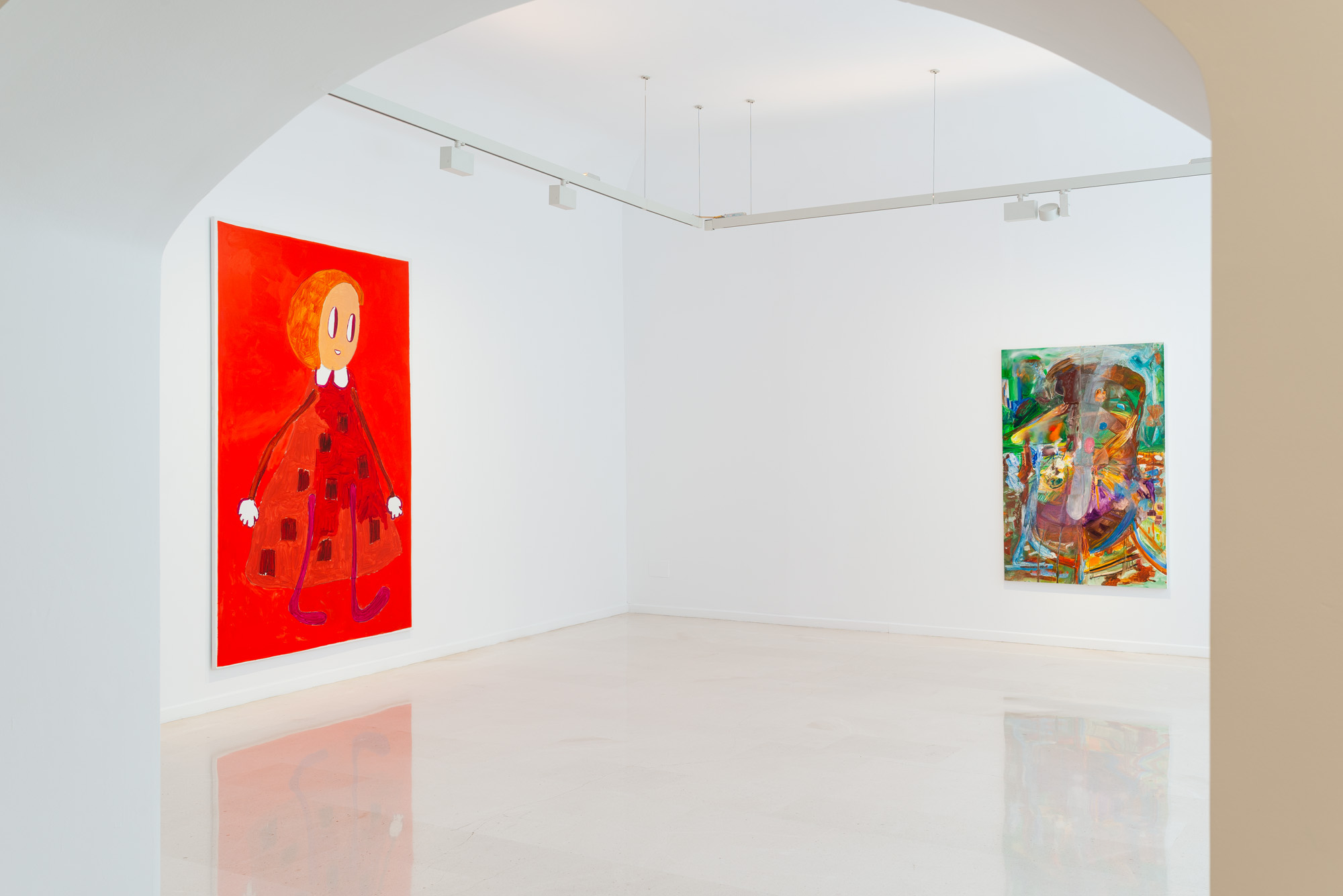
One does not enter these paintings. They are the ones that slowly begin to occupy the space. Forms waver, shift, draw closer to one another and then separate again. Nothing ever becomes completely fixed. Something begins to appear and, at the same time, something resists doing so. Painting does not offer itself as an answer. It offers itself as an apparition.
Each work seems to obey a different logic and yet the same vibration runs through them all. We are not witnessing a representation. We are witnessing a process. The images remain in an intermediate state in which matter preserves the memory of its own transformations.
At a time when images reach us completely resolved, these works produce the opposite effect. They force us to slow down. To remain. To look before naming. Little by little, we discover that painting may transform something more than what we see. It also changes the relationship we establish with it.
At first, it is difficult to understand why these paintings have been gathered. They barely resemble one another. For a moment, one has the impression of listening to different conversations. But it is enough to remain before them a little longer for something to change. They do not begin to look alike either. What eventually reveals itself is something else. Perhaps it is precisely this something else that the title "Espinturalidad" attempts to name, without ever fully defining it.
There are questions that painting leaves open. There comes a moment when it needs to continue formulating them elsewhere. This is not about abandoning painting. What changes is the place from which we come to see it.
The exhibition begins by shifting the question.
Albert Oehlen has never tried to protect painting from whatever might endanger it. Rather, he has continually sought out situations in which it would be forced to prove that it was still alive. Not through arguments. Through problems. Every solution eventually becomes the next problem.
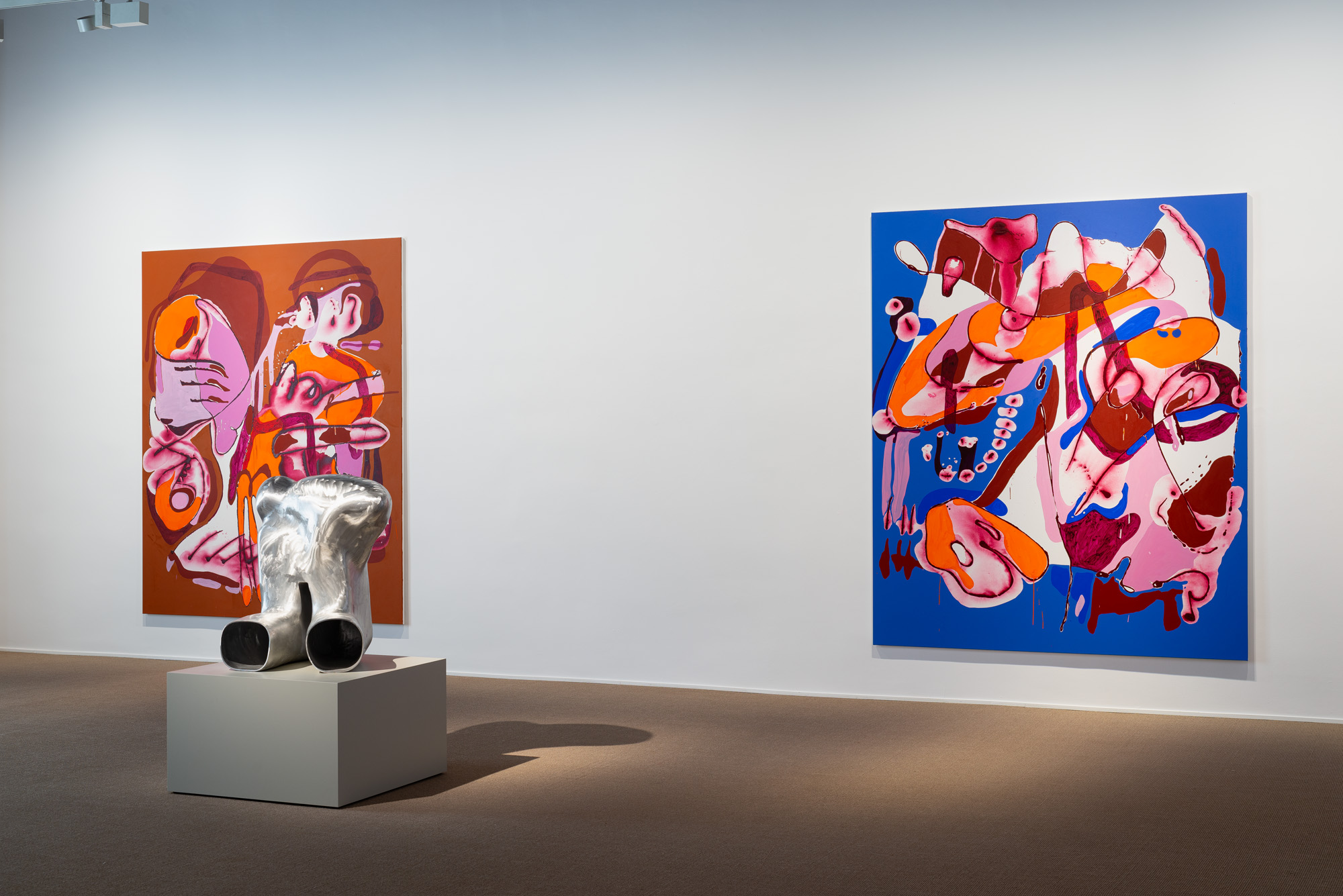
For this reason, this sculpture can be understood as the natural consequence of the same way of thinking. In that sense, perhaps also as a self-portrait. Not because it represents the artist, but because it makes visible the question that has accompanied his work for decades.
At first, we believe we recognise a sculpture without difficulty. Little by little, we realise that we are also looking at our own habits of perception. To look also means completing what we believe we recognise. When that continuity begins to fracture, we discover that interpretation had always been part of looking.
From that moment on, the sculpture ceases to be merely an object. It becomes a question about our own way of looking. Perhaps Espinturalidad also begins there: when the work silently begins to transform the gaze that contemplates it.
This transformation inevitably pushes us towards another dimension of the work. If, in Albert Oehlen, the image shifts within the space of our perception, in Luis Gordillo it begins to shift through time.
Static images seem to have always existed in the same state. Gordillo's painting starts from a different suspicion: no image appears all at once. All images retain something of what they have just left behind and anticipate something of what they have not yet become. We look at a painting and tend to think that it has always been this way, as though time had disappeared at the very moment the image was fixed. In Gordillo, the logic is precisely the opposite. Time remains at work within the painting.
In Regado / Inundado (2003), the different states of the image remain simultaneously active. The layers exist alongside one another and modify each other. What came before persists when what comes next arrives. Painting thus ceases to record a moment and becomes an ongoing transformation.
In Nymphéas XII (2001), the same idea takes place in a different way. The forms seem to repeat themselves, although each time they do so differently. Each variation preserves the memory of the previous one. The image continues to reorganise itself as we look at it, reminding us that looking also means accompanying a process. Time thus ceases to be a subject of painting and becomes part of its very material.
In Ann-Kristin Hamm's canvases, time acts differently. The image is still emerging.
The paintings, o.T. (2026_3), o.T. (2026_7) and o.T. (2026_9), all from 2026, seem to exist in that extraordinarily fragile moment in which a form has not yet fully decided what it is.
We tend to imagine that images burst into existence all at once. Experience seems to suggest otherwise. Before becoming visible, forms pass through a region of uncertainty. They exist between what they come from and what they will eventually become. Hamm's paintings deliberately remain on that threshold. They prolong the emergence of an image. They take shape slowly, gradually finding their own stability. This is why it is so difficult to decide where the background ends and the figure begins; that separation has not yet taken place. We then understand that painting accompanies the amount of time a form needs in order to come into existence.
In Jana Schröder, the opposite happens: the question is what remains once form has already undergone countless transformations.
The two works shown here, JOANIVERSE XBLD L4 (2026) and JOANIVERSE XBLD L3 (2026), display a surface that preserves its own process. Each layer retains the trace of those that came before it. The painting keeps visible the work that has constructed it. The surface ceases to be a boundary and becomes the place where the history of the painting itself is inscribed.
Perhaps this is why these works produce such a strange sense of density. That density comes from the silent pressure that each layer continues to exert on the others. What is visible belongs to the present, but also to what persists and resists disappearing.
In Markus Oehlen, something different occurs. Painting speaks several languages at once.
In the works Untitled (2026), Farbe auf Leinwand 006 (2026) and Farbe auf Leinwand 003 (2026), the differences that run through them remain active. Painting, drawing, writing, collage and graphic signs appear simultaneously. Each occupies its own place while also being transformed through contact with the others. As in a jazz improvisation, each language retains its own voice while continuously listening to the others. The unity of the work emerges precisely from this relationship.
In André Butzer, this tension takes different forms.
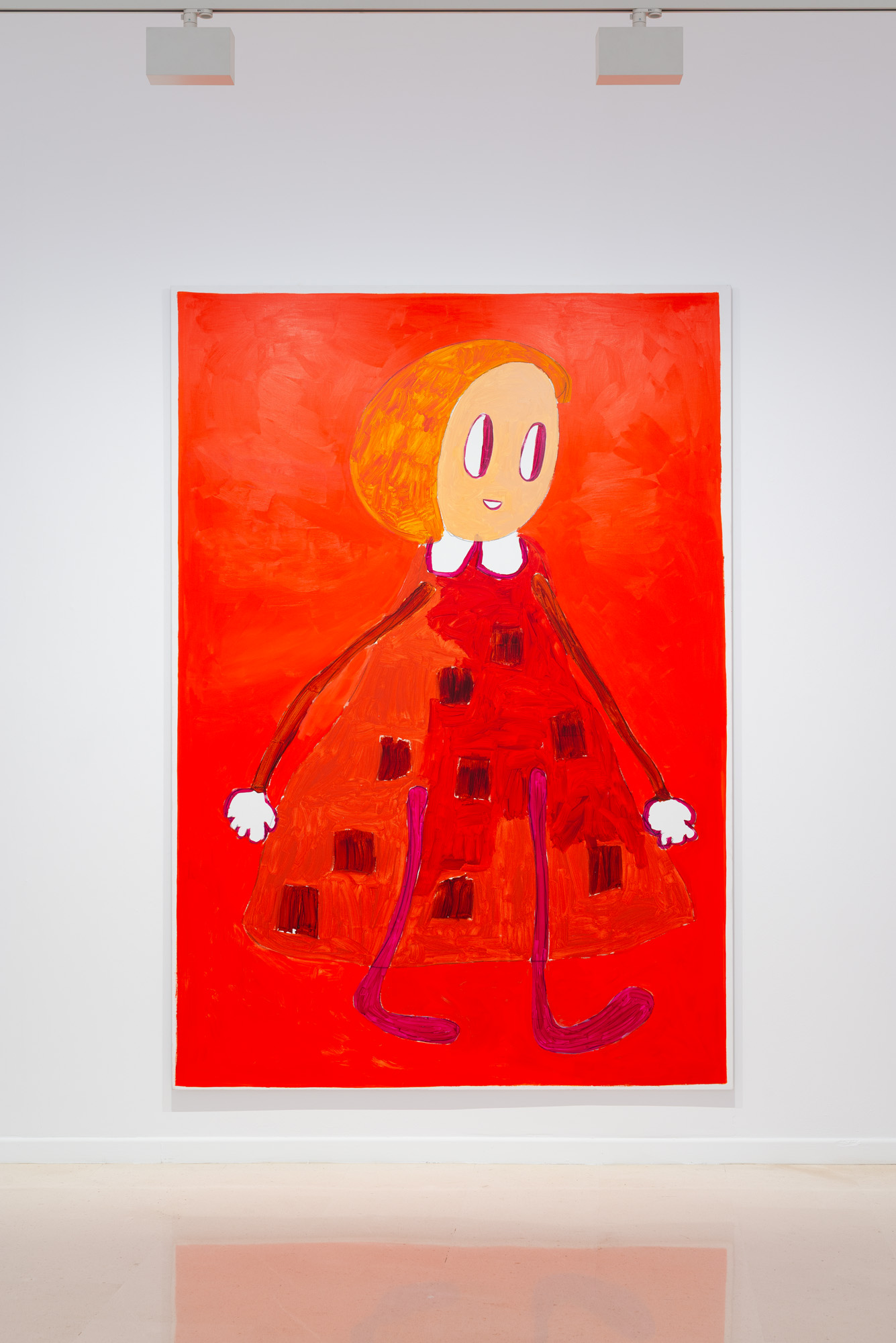
The three works brought together here, Untitled (2011), Untitled (2015) and Untitled (2026), seem to belong to completely different universes. One unfolds a large figure across an almost absolute red field. Another presents painting naked and in almost silent presence. The third transforms that same energy into an open and luminous lithograph. It is difficult to imagine three more different responses to the same question.
And yet the tension remains. It runs through all three works while everything else changes. That force arises from the necessity with which each element ultimately takes its place. Each form seems to sustain more than it reveals; each colour radiates more than it manages to say. It is there that painting reaches an intensity capable of sustaining itself.
There comes a moment when the questions cease to move forward separately. Throughout this journey, they seemed to lead us in different directions: the gaze, time, emergence, persistence, relationship, tension. Perhaps that was never the case.
Before Untitled (2025), by Albert Oehlen, the gaze immediately searches for a centre. It believes it has found one. Moments later, it loses it again. What seemed to organise the painting begins to shift. Every reading eventually loses its stability. The painting continues to reorganise itself, just as our way of looking at it does.
Albert Oehlen does not create a synthesis. He keeps incompatible pictorial systems simultaneously active without forcing them to reconcile. Only then do we understand that none of the previous questions belonged exclusively to a particular work. They all described different ways of approaching the same experience.
Little by little, we stop trying to resolve the painting. We simply inhabit it. Spirituality may not be the experience of an absolute order, but rather the ability to remain within a complex reality without needing to reduce it in order for it to make sense.
But if such an experience is possible, one final question remains. Where does it take place? In the painting, in the person who creates it, in the person who contemplates it, or in what emerges from their intersection? Perhaps this entire exhibition has also been a preparation for posing this question.
In the painting of Christoph Steinmeyer, that question begins, quite simply, to be experienced.
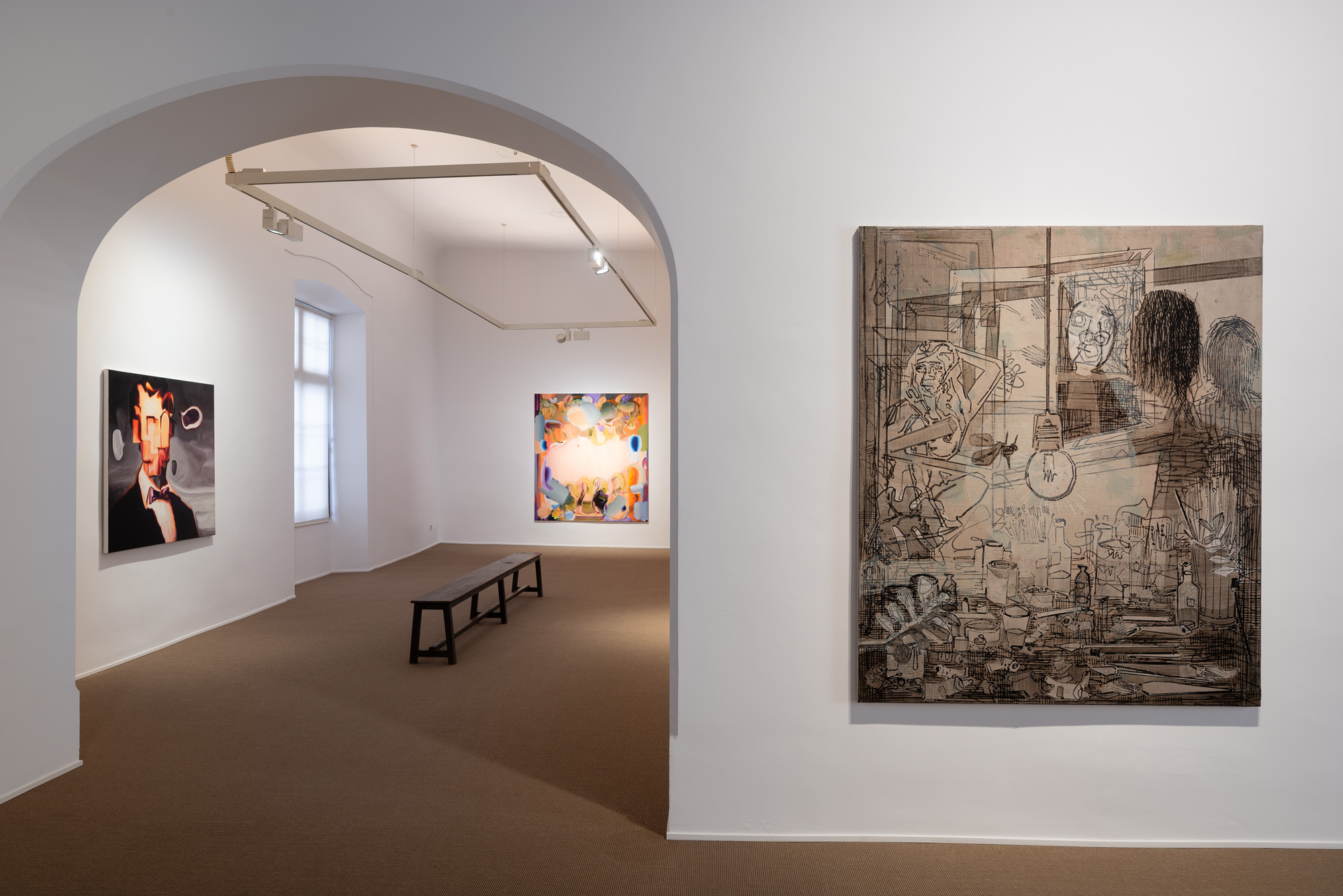
The three works seem, at first glance, to have very little to do with one another. In Encuentros nº 4 (2024), two surfaces approach one another until they produce an extremely fragile relationship. Each gesture alters the balance of the image, and there comes a moment when any further intervention would destroy precisely what was taking place.
The other two paintings, The Most...(Burger) (20212022) and Chatham House Rule (2013), seem to come from an entirely different place. In the first, a hamburger occupies almost the entire canvas. It is seen frontally, isolated against a dark background and treated with a strange solemnity. We immediately know what we are looking at. And yet, the longer we look at it, the less sufficient it becomes to call it a hamburger. Its scale, light and isolation lend it something of an idol. An absolutely familiar object acquires an unexpected presence.
In the second, a recognisable figure is transformed until it comes to exist between two worlds: it is neither fully a representation of reality nor an abstraction. Its form evokes something belonging to a shared imaginary and, at the same time, seems to return the gaze to the viewer.
The distance between the three paintings is enormous. And precisely for that reason, it matters. One needs time for something to occur between two surfaces; the others deliver their image all at once and then begin to make it strange. In one, recognition takes time. In the others, recognition happens immediately, but it is not enough.
They are two very different ways of following the consequences of a pictorial decision.
If the paintings in this exhibition share anything, it is not a particular way of painting. Steinmeyer establishes the conditions for the encounter, proposes a word to sustain it and, when the moment comes, takes a step back.
There are words that describe the world. Others, very few, subtly alter the way we see it. I like to think that Espinturalidad belongs to this second family. Rather than inventing a new reality, it attempts to name an experience of attention that these works had already been sharing silently.
From now on, the word will follow its own path. As good paintings do.
ABOUT THE ARTISTS
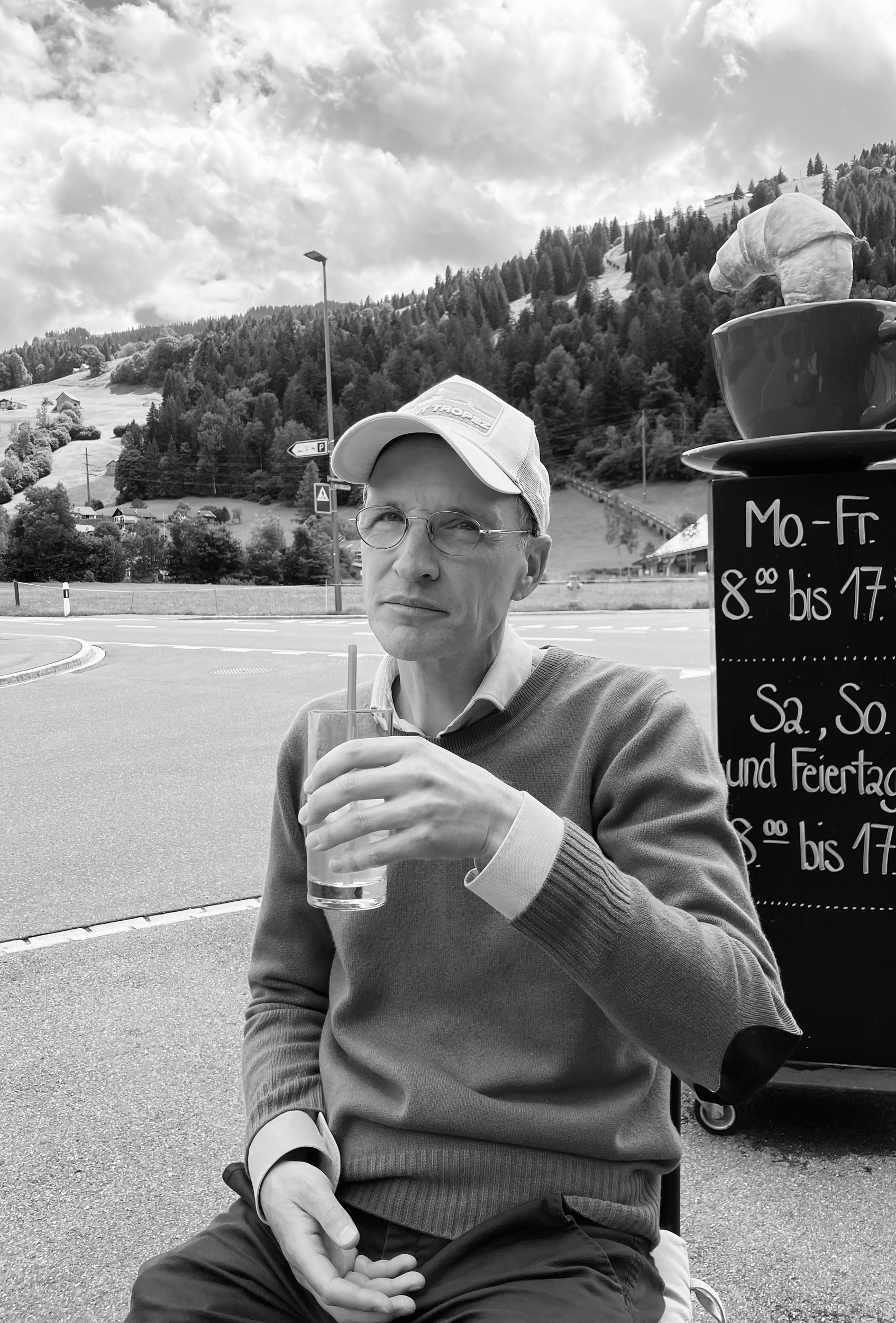
ANDRÉ BUTZER
(Stuttgart, 1973)
Lives and works in Rangsdorf, Germany
One of the most accomplished painters of his generation, André Butzer has developed an exceptional body of work over the past three decades. His practice brings together the expressive tradition of European modernism particularly the work of Henri Matisse, with the conceptual and serial strategies of post-war American art such as Andy Warhol, reconciling the twentieth-century divide between the expressive and the "ready-made" and exploring the possibilities of painting as a space in which seemingly opposing approaches can coexist.
Butzer's oeuvre encompasses brightly coloured grids, intensely black cosmic landscapes and monumental, wide-eyed figures rendered with white-gloved hands. Although firmly rooted in Expressionism, his work has continuously evolved in terms of style, medium, composition and subject matter. Each new phase emerges in dialogue with what came before it, creating a cyclical understanding of painting in which past, present and future remain closely interconnected.
For Butzer, painting is inseparable from an engagement with contemporary experience — from life and death to society, popular culture and mass entertainment. His works inhabit a fictional universe he calls Nasaheim, a combination of NASA and Anaheim, California. Within this imagined world, utopian visions coexist with the contradictions and darker realities of modern society. Butzer describes his approach as "Science Fiction Expressionism," bringing together the language of Expressionism with the imagery and fantasies of science fiction, popular culture and American entertainment.
Butzer's paintings offer solace and insist on human endurance in the face of the frailty of our existence in almost hopeless times. They bear testament to his courageous and continuous enquiry into societal contradictions and social non-conformity. 'Paintings,' says Butzer, are 'localizations of the greatest despair and the greatest hope,' and this is exactly why 'they come closest to the very joy and aid we are in dire need of.'
Drawing on influences as diverse as Paul Cézanne, Edvard Munch, Henri Matisse and Walt Disney, Butzer has developed a highly distinctive visual language and a unique fictional universe.
His work has been the subject of numerous solo exhibitions at international institutions, including Museo Novecento, Florence; Museo Nacional Thyssen-Bornemisza, Madrid; Kunstverein Friedrichshafen; IKOB Museum of Contemporary Art, Eupen; Kestner Gesellschaft, Hannover; Kunsthalle Nürnberg; Kunstverein Reutlingen; Museum of Light, Hokuto; Växjö Konsthall; and YUZ Museum, Shanghai, among others.
His work is held in numerous public and private collections worldwide, including the Museo Nacional Thyssen-Bornemisza, Madrid; Taschen Collection, Cologne; Art Institute of Chicago; Carré d'Art Musée d'art contemporain, Nîmes; Contemporary Art Collection of the Federal Republic of Germany, Bonn; Deichtorhallen Hamburg; Hall Art Foundation, Reading; Kupferstichkabinett, Staatliche Museen zu Berlin; Nationalgalerie / Hamburger Bahnhof Museum für Gegenwart, Berlin; LACMA, Los Angeles; MOCA, Los Angeles; Paula Modersohn-Becker Museum, Bremen; Rubell Museum, Miami; and YUZ Museum, Shanghai.
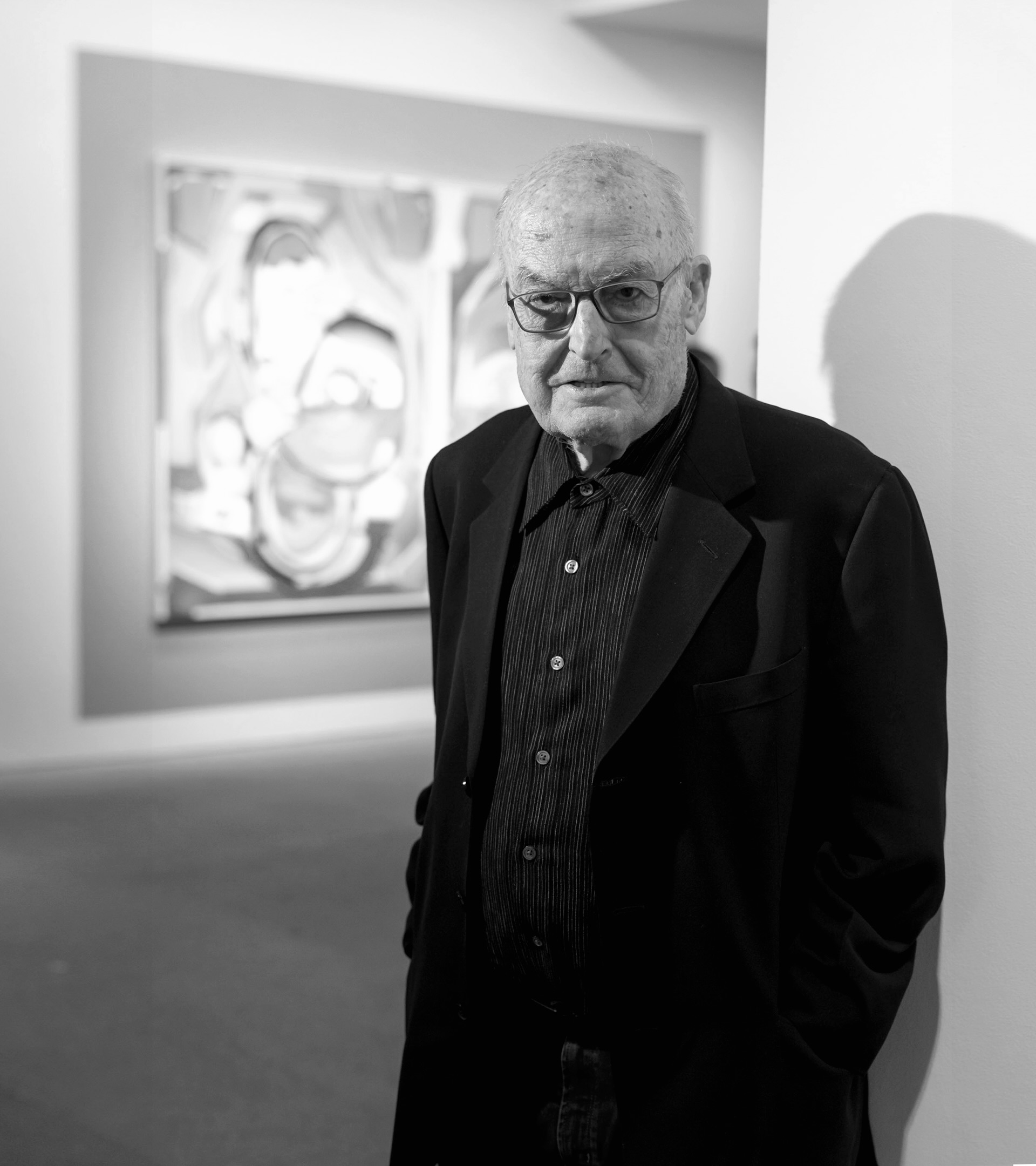
LUIS GORDILLO
(Sevilla, 1934)
Lives and works in Madrid
Luis Gordillo is one of the most influential and prolific Spanish painters of his generation and a key figure in the renewal of painting in Spain from the 1960s onwards. In close contact with the European art of his time, particularly the work of Wols, Jean Dubuffet, Henri Michaux and Jean Fautrier, his early work also reveals the influence of Surrealism and Antoni Tàpies. From the late 1960s and early 1970s onwards, Gordillo incorporated a new visual vocabulary associated with Pop Art, while developing a highly personal approach to figuration, colour and the processes of image-making.
Gordillo has been a constant innovator of the pictorial language. At a time when abstraction dominated much of the Spanish art scene, he was among the artists who reintroduced figuration in the early 1970s, approaching it from an experimental and deeply personal perspective. It was also during this period that he began working with photographic images, incorporating them in different ways into the creative process of his paintings. Photography and other methods of image reproduction would subsequently become essential tools within his practice, allowing him to explore the relationship between the original image, its transformation and its repetition.
His interest in psychoanalysis and his sustained investigation into the mechanisms of perception and representation have informed a body of work characterised by constant experimentation. The idea of painting as a process — one of continuous construction and transformation — together with strategies of accumulation, repetition and fragmentation, have remained fundamental throughout his career. Rather than adhering to a single style, Gordillo has continually questioned and expanded the possibilities of painting, moving freely between figuration and abstraction, painting and photography, the organic and the mechanical.
Over more than five decades, Gordillo has established himself as one of Spain's most important painters and as a central figure in the development of contemporary Spanish art. His work has been presented in major international exhibitions, including the XXXV and XXVII Venice Biennials; XI and XVIII São Paulo Biennials; Musée d'Art Moderne, Paris; Calouste Gulbenkian Foundation, Lisbon; Kunstmuseum Düsseldorf; MASP, São Paulo; Museo de Bellas Artes de Caracas; Museo Nacional de Bellas Artes, Havana; National Gallery, Copenhagen; Fine Arts Museum, Taipei; and Serralves Museum, Porto.
His work has also been the subject of major retrospective and anthological exhibitions at institutions including the Museo Nacional Centro de Arte Reina Sofía, Madrid; Kunstmuseum Bonn; MACBA, Barcelona; Meadows Museum, Dallas; Museum Folkwang, Essen; Museo de Arte de Zapopan, Jalisco; Lunds Kunsthall; IVAM, Valencia; Artium, Vitoria-Gasteiz; CAAC, Seville; CGAC, Santiago de Compostela; MACA, Alicante; CCCC, Valencia; and Alcalá 31, Madrid.
Gordillo's work is held in numerous public and private collections, including the Museo Nacional Centro de Arte Reina Sofía, Madrid; MACBA, Barcelona; Centro Andaluz de Arte Contemporáneo, Seville; Instituto Valenciano de Arte Moderno (IVAM), Valencia; Museo de Bellas Artes de Bilbao; Artium, Vitoria-Gasteiz; Fundació "la Caixa"; Fundación Juan March; Fundación AENA; Instituto de Crédito Oficial; Caja Madrid; CajaSol; Caja Burgos Collection; and Museum Folkwang, Essen.
Throughout his career, Gordillo has received numerous distinctions, including the Premio Nacional de Artes Plásticas (1981); Premio de la Comunidad de Madrid a la Creación Plástica and Premio Andalucía de Artes Plásticas (1991); Premio de la CEOE a las Artes Plásticas (1992); Medalla de Oro al Mérito en las Bellas Artes (1996); Premio Tomás Francisco Prieto de la Casa de la Moneda (1999); Premi Ciutat de Barcelona d'Arts Plàstiques (2000); Premio Aragón-Goya de Pintura (2003); Medalla de Oro del Círculo de Bellas Artes de Madrid (2004); and Premio Velázquez de las Artes Plásticas (2007). In 2008, he was appointed Chevalier de l'Ordre des Arts et des Lettres by the French Ministry of Culture and Communication.
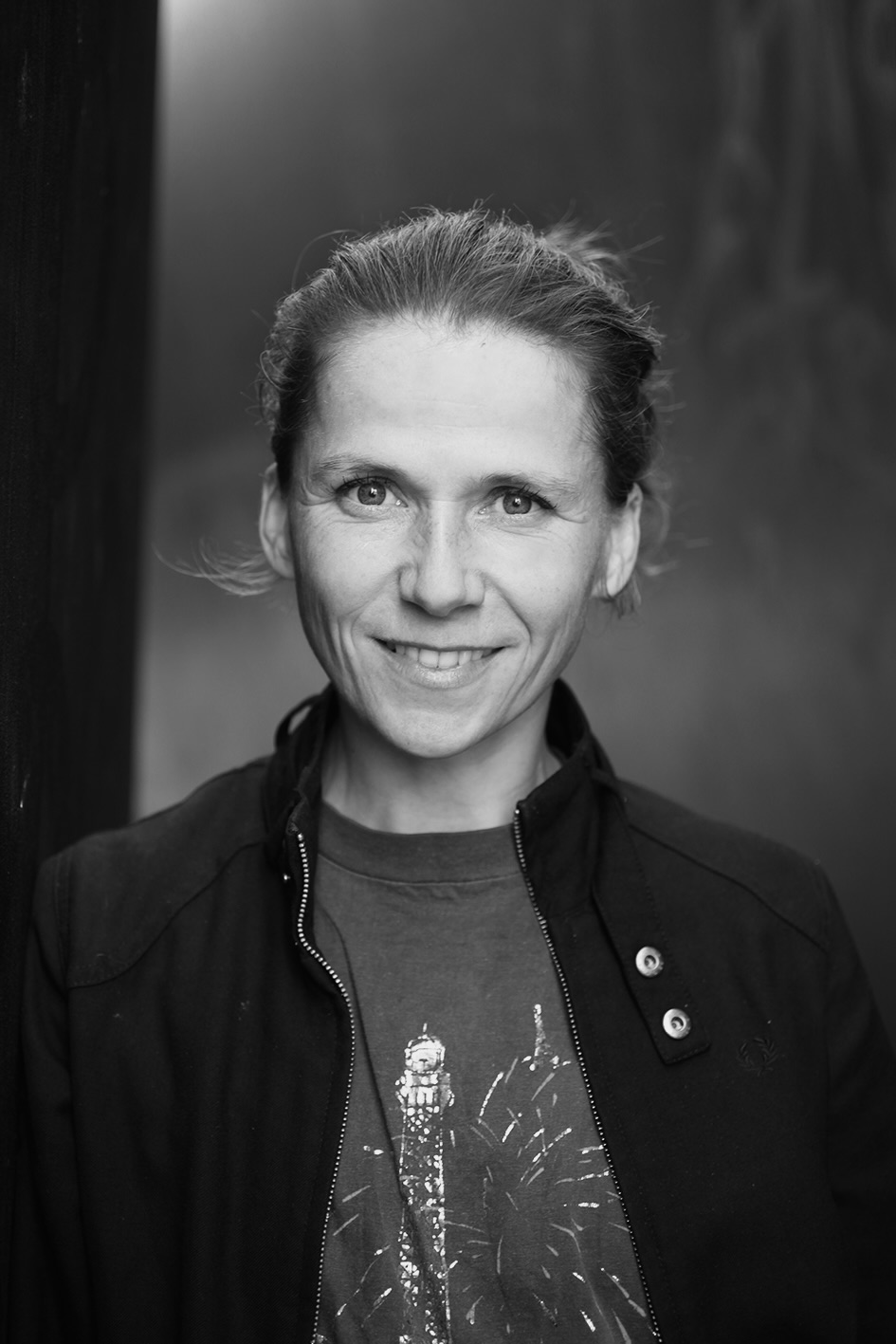
ANN-KRISTIN HAMM
(Mönchengladbach, Germany, 1977)
Lives and works in Berlin
Ann-Kristin Hamm studied at the Kunstakademie Düsseldorf from 1998 to 2004, where she was a student of Dieter Krieg and Albert Oehlen, and completed her studies as a master student under Krieg in 2002. In 2006, she received a DAAD postgraduate scholarship in Tokyo and has subsequently worked in Paris and Kyoto. Between 2021 and 2023, she taught at the Kunstakademie Düsseldorf.
Hamm's large-format paintings explore the space between figuration and abstraction, reinventing landscapes and plant forms through vibrant colours, transparent washes and ornamental gestures. Her compositions remain open and associative, with forms that seem to emerge, dissolve and transform across the canvas. Chance and spontaneity play an important role in her process, as accidental marks, splashes, drips and traces coexist with more deliberate gestures. This balance between intention and process gives her paintings a sense of movement, freedom and visual musicality.
Her work has been presented in solo and group exhibitions at institutions and galleries including Malkasten, Düsseldorf; Museum Kunstpalast, Düsseldorf; Kunstverein Wiesbaden; Neue Galerie Gladbeck; Kunstverein Halle; Deutsche Bundesbank, Frankfurt; Kunstverein Schwerte; Galerie Juana de Aizpuru, Madrid; Galerie Rupert Pfab, Düsseldorf; Galerie Krinzinger, Vienna; and K&L Museum, Seoul, among others.
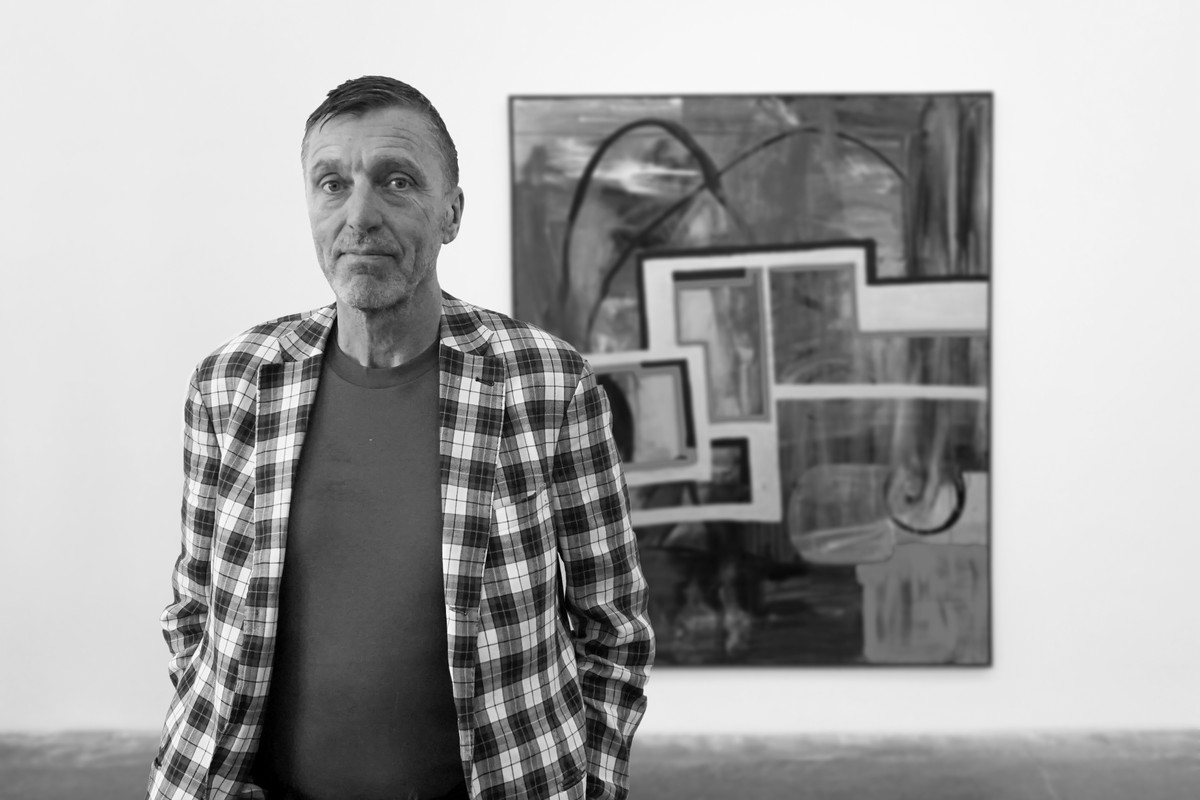
ALBERT OEHLEN
(Krefeld, Germany, 1954)
Lives and works in Switzerland
Albert Oehlen is one of the most influential and respected painters of his generation. Since the 1980s, he has continually questioned the means, methods and conventions of painting, seeking to reinvent the medium and challenge its traditional hierarchies. Through the collision of different styles, orders and media, Oehlen has expanded the possibilities of painting according to what he himself wants to see.
Oehlen studied at the Hochschule für Bildende Künste Hamburg from 1978 to 1981 and soon became a prominent figure in the Berlin and Cologne art scenes. He was associated with the Junge Wilde, alongside artists such as Martin Kippenberger and Werner Büttner, whose practices challenged the established artistic order and resisted categorisation. From the outset, Oehlen approached painting as a field of experimentation, deconstructing it into its fundamental elements—colour, gesture, movement and time—and establishing constraints within his own practice as a way of generating new possibilities.
His work has evolved through radically different approaches, from paintings combining abstract and figurative elements to compositions based on grids of coloured squares. He has also incorporated new technologies and mechanical forms of image production, including inkjet printing and computer-aided design. In the late 1990s, he began spray-painting over collaged imagery transferred onto canvas using large industrial printers, further disrupting the distinction between the handmade and the mechanically produced image.
Oehlen's practice is ultimately rooted in a fundamental belief in painting's capacity for reinvention. His embrace of so-called "bad painting" deliberately introduces awkwardness, distortion, crude gestures and unconventional combinations of colour and form, challenging established ideas of beauty, skill and artistic control. By bringing together apparently opposing elements—delicacy and coarseness, colour and vagueness, order and disorder—Oehlen continually expands the language of painting while reflecting on its history and its relationship to contemporary society.
Since 1981, Albert Oehlen's work has been presented in numerous solo exhibitions at major international institutions, including Kunsthalle Basel; Kunsthalle Zürich; Deichtorhallen, Hamburg; IVAM Centre del Carme, Valencia; Kunsthalle Nürnberg; Musée d'Art Moderne et Contemporain de Strasbourg; Whitechapel Gallery, London; Arnolfini, Bristol; MOCA Museum of Contemporary Art, North Miami; Kunstmuseum St. Gallen; Carré d'Art Musée d'art contemporain de Nîmes; mumok Museum Moderner Kunst Stiftung Ludwig, Vienna; Museum Wiesbaden; New Museum, New York; The Cleveland Museum of Art; Guggenheim Bilbao; Museo Nacional de Bellas Artes, Havana; Pinault Collection, Palazzo Grassi, Venice; Aïshti Foundation, Beirut; Hamburger Kunsthalle; and Kunsthalle Düsseldorf, among others.
His work has also been presented by leading international galleries and art spaces, including Galerie Max Hetzler, Berlin, Paris and London; Gagosian, New York, London, Paris, Beverly Hills and Hong Kong; Skarstedt, New York; Luhring Augustine, New York; Galerie Bärbel Grässlin, Frankfurt; Galerie Juana de Aizpuru, Madrid and Seville; Nino Mier Gallery; and Jahn und Jahn, Munich and Lisbon.
Selected public collections are: The Broad, Los Angeles; Centre Pompidou, Paris; Cleveland Museum of Art; Fondation Louis Vuitton, Paris; Institut Valencià d'Art Modern; Institute of Contemporary Art, Miami; Kunstmuseum Bonn; Kunstsammlungen Chemnitz; Los Angeles County Museum of Art; Marciano Foundation, Los Angeles; Miettinen Collection, Berlin; Museum Brandhorst, Munich; MMK Museum für Moderne Kunst, Frankfurt; Museum of Contemporary Art, Chicago; MOCA Grand Avenue, Los Angeles; MoMA The Museum of Modern Art, New York; MUDAM Musée d'Art Moderne Grand-Duc Jean, Luxembourg; Musée d'Art Moderne de Paris; mumok Museum Moderner Kunst Stiftung Ludwig, Vienna; Musée d'Art Moderne et Contemporain, Strasbourg; Pinault Collection, Paris and Venice; Sammlung Falckenberg, Hamburg; Sammlung Würth, Schwäbisch Hall; Staatliche Kunstsammlungen Dresden; Städel Museum, Frankfurt; Tate, London; and ZKM Zentrum für Kunst und Medientechnologie, Karlsruhe.
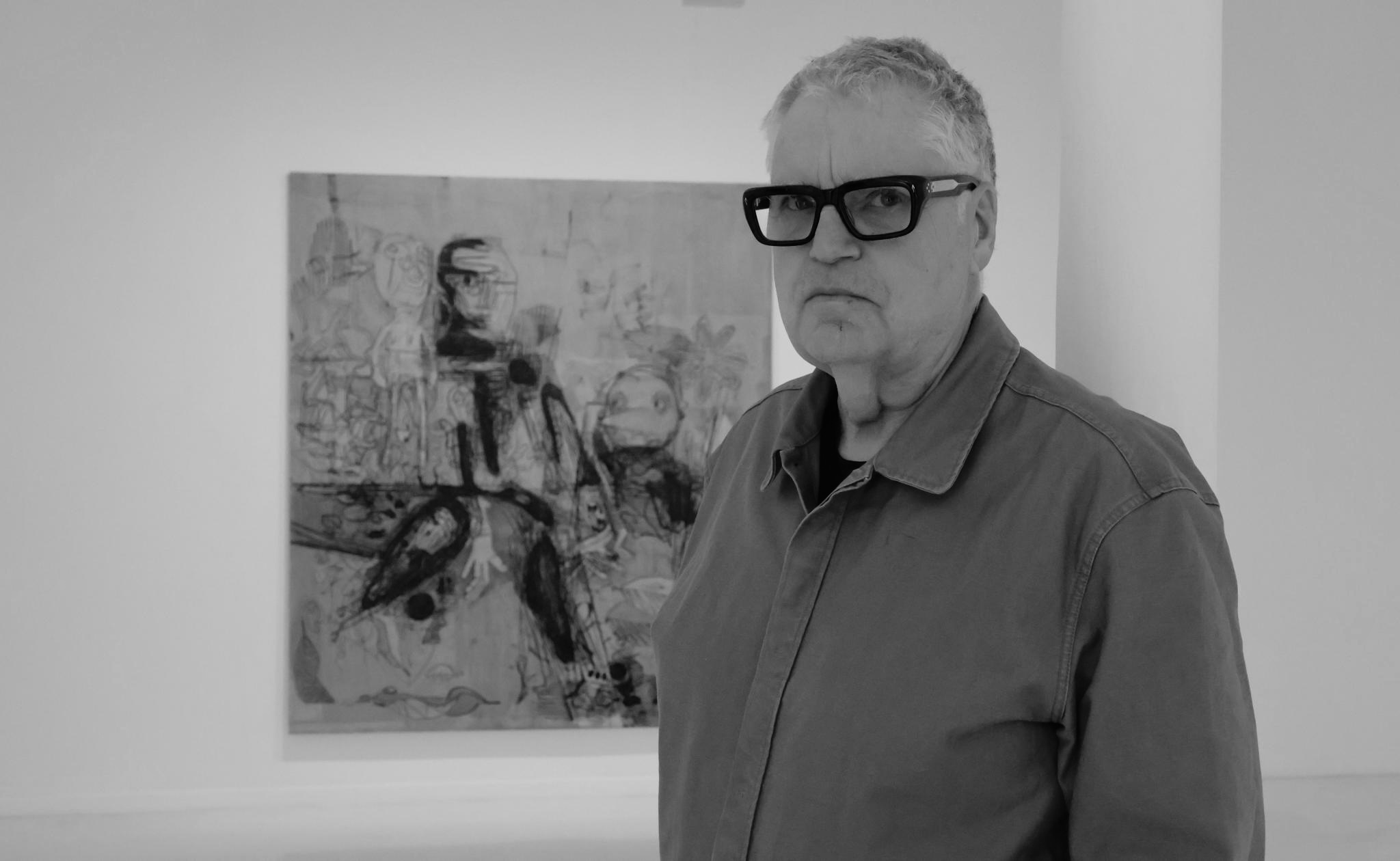
MARKUS OEHLEN
(Krefeld, Germany, 1956)
Lives and works in Munich
Markus Oehlen lives and works in Munich. He studied at the Kunstakademie Düsseldorf between 1976 and 1982 and is a founding member of the German neo-expressionist movement Junge Wilde (Wild Youth). From the early 1980s onwards, he emerged on the art scene alongside a generation of artists including Martin Kippenberger, Georg Herold and Werner Büttner, characterised by their critical stance towards dominant ideology and their rejection of the formal purity of Minimalism and Conceptualism.
In the 1970s and 1980s, together with his brother Albert Oehlen and other artists, the Junge Wilde group advocated a more vital, gestural and emotional form of painting, reviving the countercultural spirit and expressive chaos associated with the Fauvist tradition. At the same time, several of its members were involved in musical projects; Oehlen, deeply connected to punk and experimental sound, was a member of bands such as Mittagspause. Music — from rock and punk to electronic music and Karlheinz Stockhausen — has remained a constant influence on his approach to painting.
Over more than four decades, his practice has encompassed painting, sculpture, digital drawing and music. His paintings function as palimpsests of superimposed layers and diverse motifs that create a powerful visual impact. Influenced by Op Art, he combines geometric structures with tense, dynamic curves that produce optical effects for the viewer. The superimposition of forms, lines and colours transforms his compositions into constantly shifting visual spaces in which perception plays a fundamental role.
Although he acknowledged the influence of Sigmar Polke in his early work, Oehlen has always maintained an independent position in relation to dominant artistic currents, even when he was associated with the Expressionism of the 1980s. His work, often linked to a post-Pop sensibility, draws on classical genres such as still life, landscape and portraiture, while avoiding explicit narrative. Instead, he prefers to suggest ambiguous atmospheres and intensities, challenging viewers to construct their own interpretations.
From 2002 to 2023, he was Professor of Painting at the Academy of Fine Arts Munich, combining his teaching with an artistic practice characterised by constant experimentation and an ongoing investigation into new pictorial languages.
He has held solo exhibitions and projects at institutions including Künstlerhaus Hamburg; Museum of Modern Art (MoMA), New York, with Georg Herold; Universidad Internacional Menéndez Pelayo, Santander, with Albert Oehlen; and Kunstsammlung Chemnitz. His work has also been presented in group exhibitions at institutions including the Nationalgalerie, Berlin; Hamburger Bahnhof Museum für Gegenwart, Berlin; Museum Ludwig, Cologne; and ZKM | Center for Art and Media, Karlsruhe, among others.
His work is held in major public and institutional collections, including the Museum of Modern Art (MoMA), New York; Saint Louis Art Museum; Museum Ludwig, Cologne; Museum Abteiberg, Mönchengladbach; Museum Frieder Burda, Baden-Baden; Kunsthalle Weishaupt, Ulm; Kunsthaus Zürich; ZKM | Museum für Neue Kunst & Medienmuseum, Karlsruhe; Kunstraum Grässlin, St. Georgen; Sammlung Falckenberg, Hamburg; Sammlung Essl, Klosterneuburg; Aïshti Art Foundation, Beirut; and the Sammlung zeitgenössischer Kunst der Bundesrepublik Deutschland, Bonn, among others.
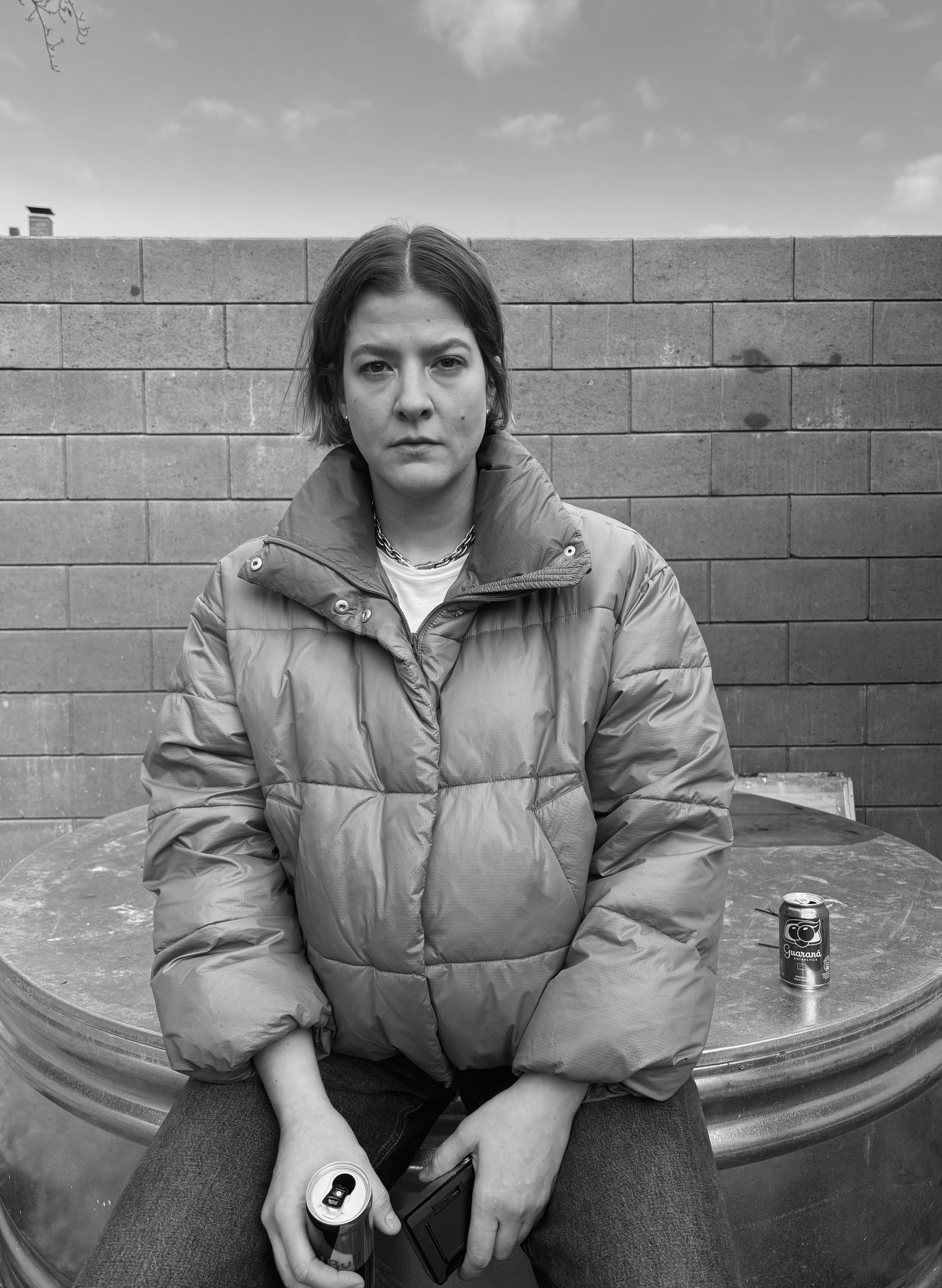
JANA SCRÖDER
(Brilon, Germany, 1983)
Lives and works in Düsseldorf
Jana Schröder studied at the Kunstakademie Düsseldorf in the class of Albert Oehlen, whose influence was particularly significant in the early development of her artistic practice.
Schröder's painting is grounded in an intense and highly process-driven approach to colour and gesture. Her works are characterised by networks of languid, curling brushstrokes that overlap and intersect across the canvas, creating a continuous movement between depth and surface. Working with highly refined palettes, often limited to two or three shades, she explores the possibilities of translucency, saturation and repetition, allowing colour and paint to become both the subject and the driving force of the composition.
Her practice is a meditation on process and repetition, slowness and speed. The meticulous accumulation of painted lines is contrasted with more spontaneous and rapidly applied passages, registering the movement of the artist's hand. Between control and chance, positive form and negative space, Schröder's paintings invite a slow and contemplative engagement, while retaining an underlying sense of energy and movement.
Since 2009, her work has been presented in numerous institutional solo and group exhibitions, including at the Aïshti Foundation, Beirut; Bundeskunsthalle, Bonn; Gesellschaft für Gegenwartskunst, Augsburg; Kopfermann-Fuhrmann Stiftung, Düsseldorf; Deichtorhallen, Hamburg; Kunstmuseum Bonn; Kunstmuseum Wiesbaden; Kunstsammlungen Chemnitz; Kunstverein Heppenheim; Kunstverein Reutlingen; Pinakothek der Moderne, Munich; Sammlung Grässlin, St. Georgen; Sankt Peter, Cologne; and Yves Klein Archives, Paris. Her gallery exhibitions include presentations at Skarstedt, Paris; Galerie Bärbel Grässlin, Frankfurt; Nino Mier Gallery, Los Angeles, Brussels and New York; and T293, Rome.
Her work is part of public collections such as Aïshti Foundation, Beirut; Friedrichs Foundation, BonnWeidingen; Miettinen Collection, Helsinki-Berlin; Sammlung Grässlin, St. Georgen.
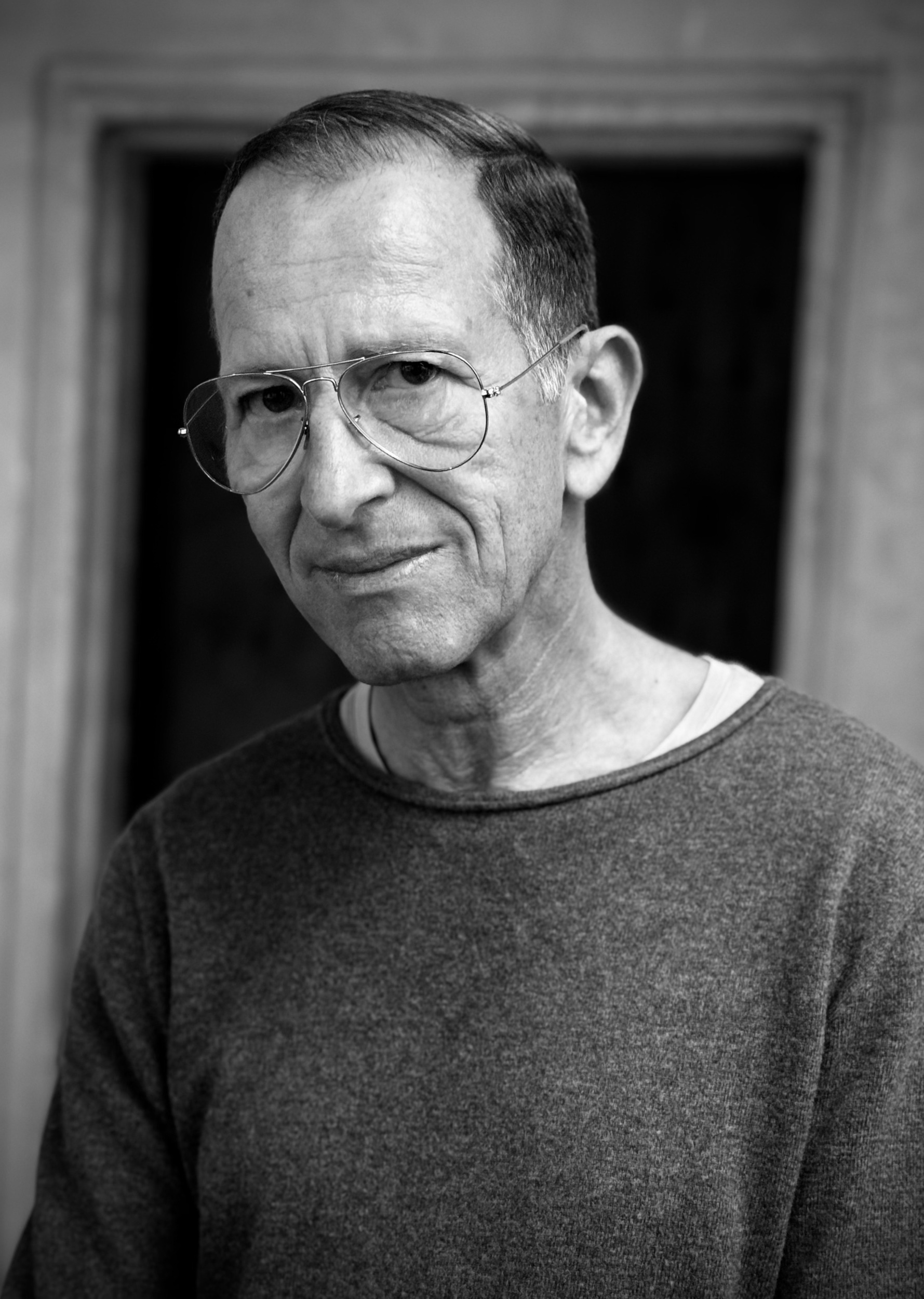
CHRISTOPH STEINMEYER
(Düsseldorf, Germany, 1967)
Lives and works between Germany and Mallorca
Christoph Steinmeyer a German artist and painter who lives and works in Berlin. Graduated in Art History and Philosophy in Cologne and Bonn, his artistic practice develops in constant dialogue with theoretical reflection, an interest that is also evident in his work as a curator and advisor to international collections.
Steinmeyer's work belongs to a generation of painters who critically examine the fundamentals of the pictorial medium and the processes involved in the construction of the image. His language, with its strong neo-surrealist influence, is characterised by meticulous, hyperrealistic painting that questions concepts such as originality, copying and perception. The tensions between what is real and what has been reproduced, as well as philosophical questions related to the psychology of vision, are a recurring theme in his work.
In his early series, developed from the 2000s onwards, Steinmeyer establishes an intense dialogue with art history, classic cinema and popular visual culture. He reinterprets recognisable images, fictional interiors and seemingly familiar scenes, transforming them into disturbing and ambiguous compositions. Using photographic sources from the media, he constructs pictorial collages that oscillate between extreme fidelity and distortion, giving rise to scenes that seem suspended between memory, dream and fiction.
Since 2014, his research has focused on the cultural impact of digital image and the mechanisms that condition its contemporary circulation. Series such as The Most... analyse the role of algorithms, data tracking and the attention economy, incorporating elements of internet culture—such as memes—to reflect on the commodification and disclosure of images.
Steinmeyer's work has been interpreted by critics such as Mark Gisbourne as a way of displacing the traditional categories of realism. Rather than representing an objective reality, his paintings construct internal visions of a transformed, intensified and deeply subjective reality, situating themselves in an intermediate territory between the recognisable and the disturbing.
His works are part of important public and private collections, including the Julia Stoschek Collection (Düsseldorf), the Hall Art Foundation, the Astrup Fearnley Museet (Oslo), the Haubrok Collection (Berlin) and the IVAM collection (Valencia).